7 Hidden Northeast Basecamps for Good Sam Members (and the Adventures They Unlock)
Discover exciting destinations in Connecticut, Massachusetts, New York, and Vermont
Image Caption:
Most RVers in the Northeast chase the same handful of campgrounds. They crowd the Cape in August, line up for spots in Vermont’s most-photographed villages, and pay peak rates for the privilege. There’s a better way to experience this region: base yourself at a quieter, well-positioned park and let the real Northeast unfold from your rig door. These seven Happy Grounds campgrounds sit just far enough from the tourist centers to give you breathing room, but close enough to everything worth doing that you’ll wonder why you ever stayed anywhere else.
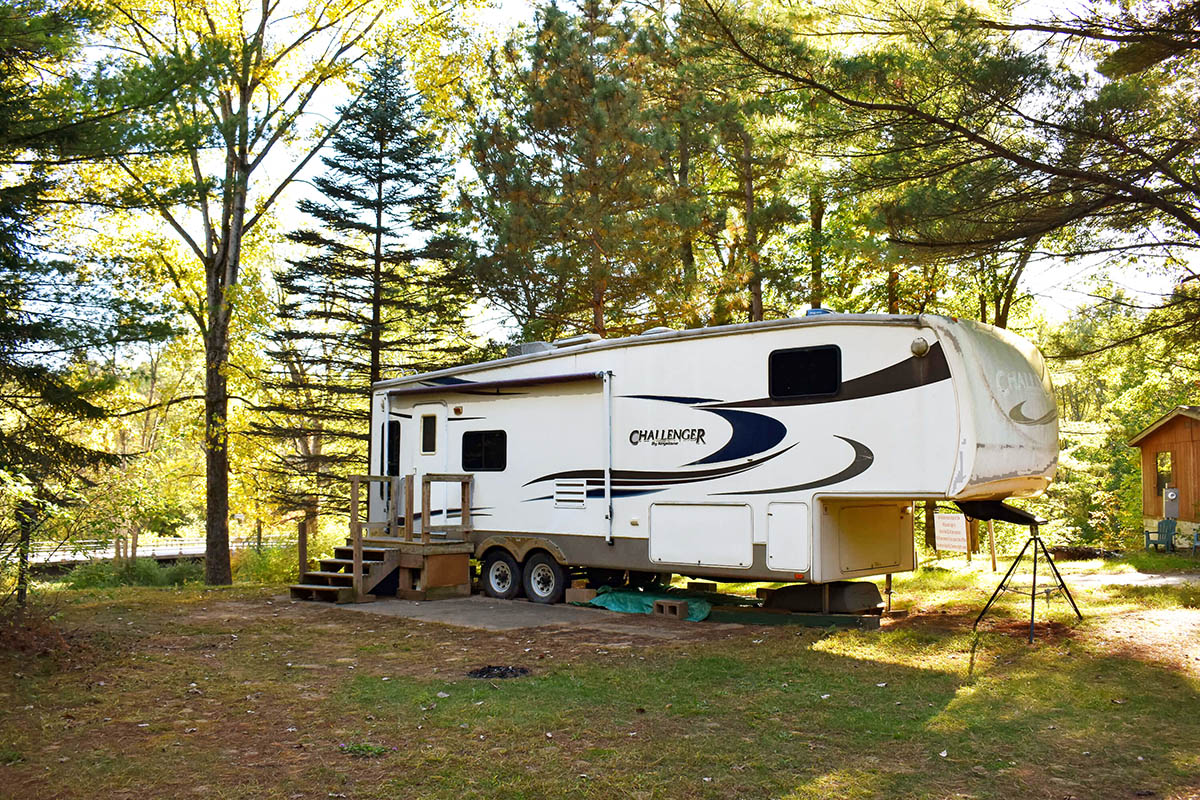
Photo courtesy of Happy Campgrounds.
Good Sam Members: Use promo code GOODSAM at checkout for 20% off your stay, plus a 7,500 Trail Miles welcome bonus (a $75 value) when you book through camphappygrounds.com/rvcom.
1. Kings Bay: Your Base for Burlington and Lake Champlain
Burlington, Vermont draws visitors for good reason: a walkable waterfront, a thriving food scene, and some of the most reliably good summer weather in New England. The problem is that campgrounds near Burlington fill fast and often charge accordingly. The Vermont side of the lake has become expensive enough that finding a quality site with actual waterfront character takes real advance planning.
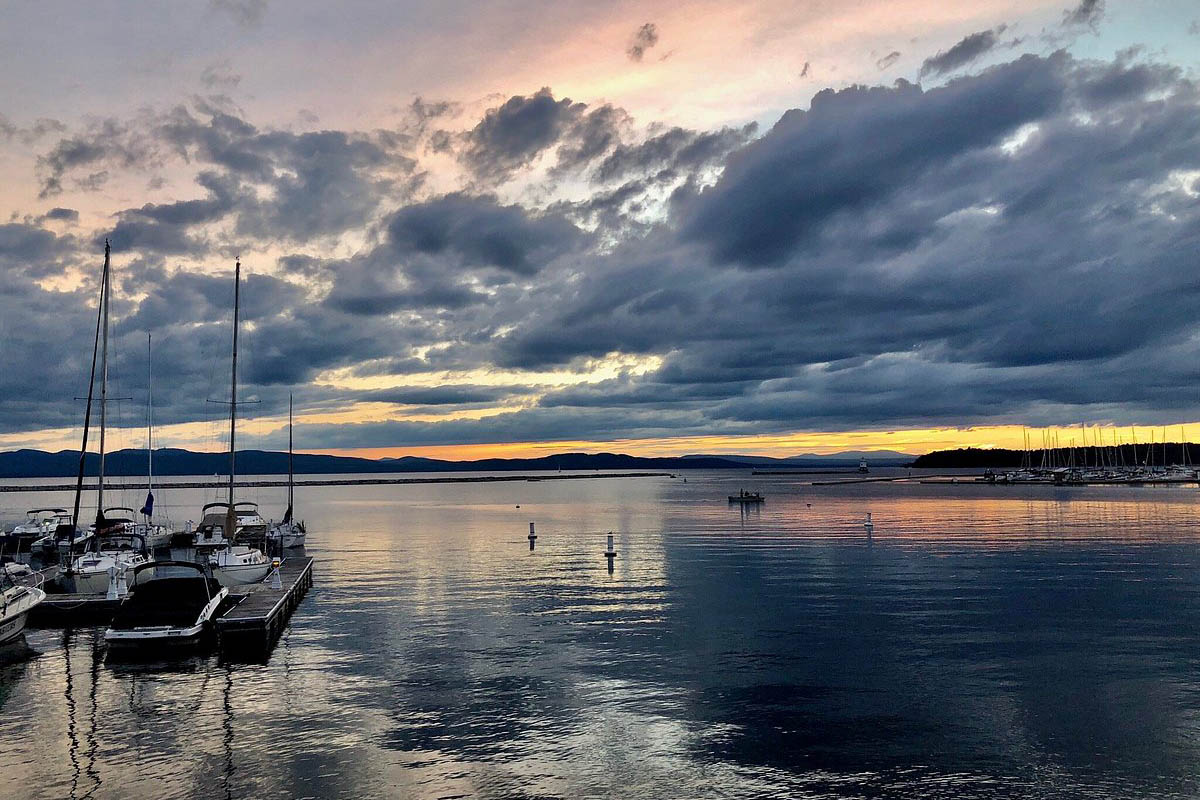
King’s Bay. Photo: CDN Content
Kings Bay sits on the New York side of Lake Champlain, roughly 30 minutes from the Plattsburgh ferry, the gateway to Burlington. Take the ferry over in the morning, spend the day on Church Street or biking the Island Line Trail, and come back to the New York shore at whatever hour suits you. The campground has waterfront access of its own, so there’s nothing stopping you from kayaking out from camp and looking back across Champlain toward the Green Mountains. When the light is right in late afternoon, that view earns its reputation.
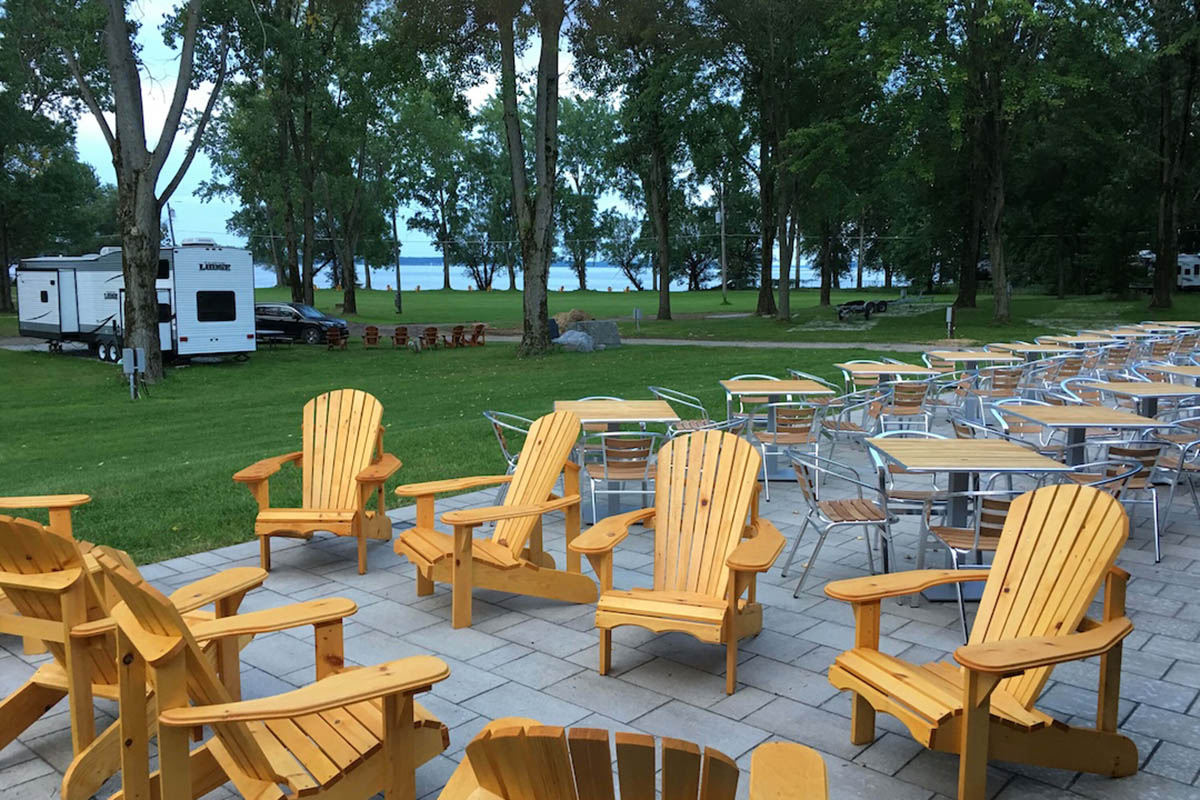
Photo courtesy of King’s Bay Campground.
Burlington’s food scene rewards those who do a little homework beforehand. The south end along Pine Street has a cluster of restaurants and a Saturday farmers’ market that locals treat as a weekly social event. Scout the waterfront restaurants early in your trip, and you’ll have a strong short list before your best evening rolls around. A bike rental from one of the Church Street shops unlocks the full Island Line Trail along the lake, including the causeway that extends out over open water.
2. Riverbend East: The Finger Lakes Without the Watkins Glen Rush
The Finger Lakes wine region is one of New York’s most rewarding drives: narrow roads threading between glacially carved lakes, farm stands appearing at every bend, and tasting rooms that rarely feel overcrowded on a weekday morning. Watkins Glen State Park, with its gorge trail and cascades, draws the biggest crowds but remains genuinely worth visiting. The Seneca Lake wine trail alone has over 30 stops, and that’s just one of eleven lakes.
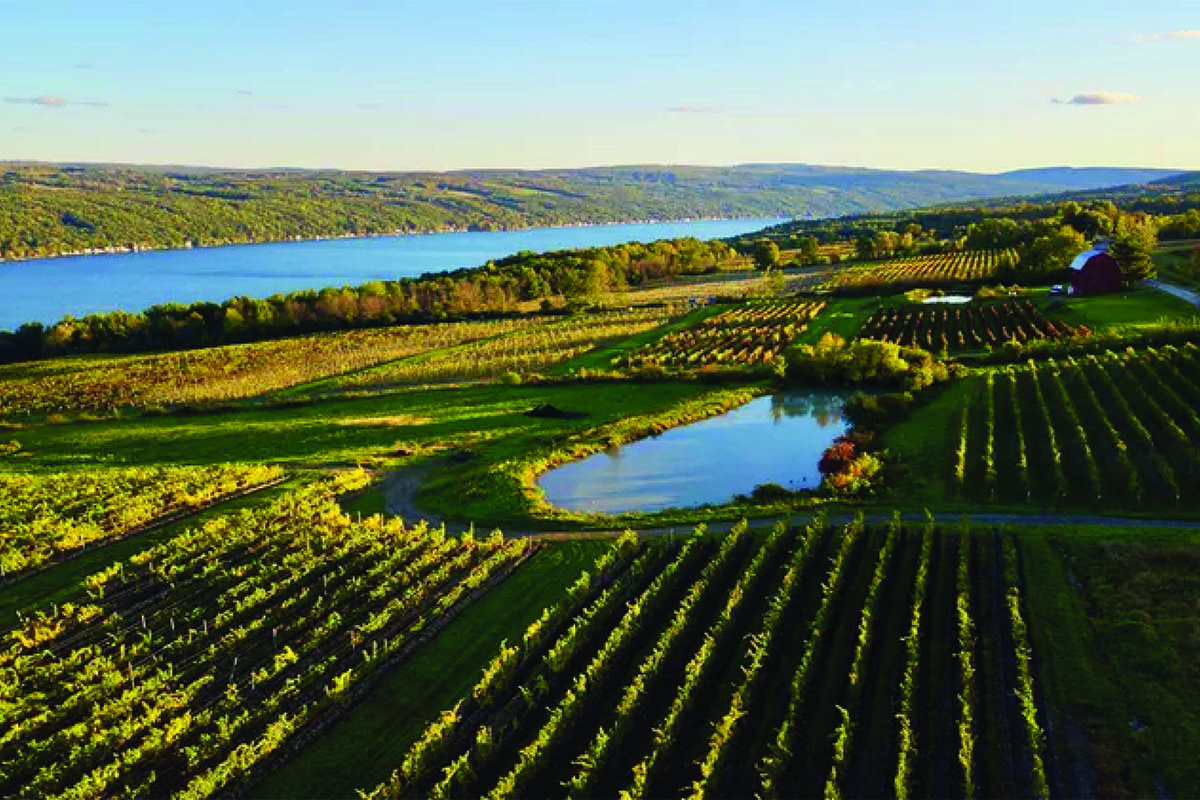
Photo: Luke Petrinec
Riverbend East in Blossvale puts you within about 2.5 hours of Watkins Glen while keeping you outside the price zone that comes with parking an RV near a major state park. The location also works well as a base for the northern Finger Lakes: Skaneateles has one of the cleaner main streets in upstate New York, and the drive south along Cayuga Lake passes enough worthwhile tasting rooms that a single afternoon rarely covers all of them.
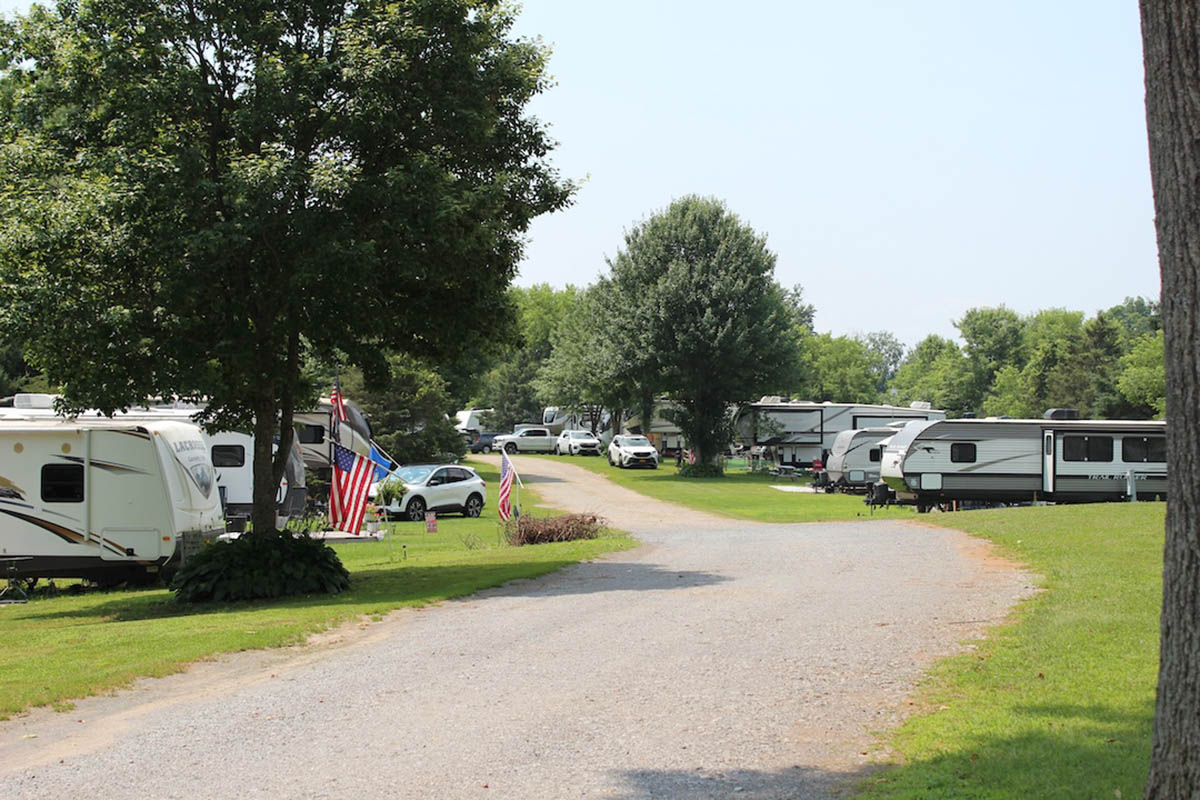
Photo courtesy of Riverbend Campground.
The Finger Lakes region rewards a slower pace: two or three wineries per day, a proper lunch somewhere along Seneca or Cayuga Lake, and an afternoon nap. There’s no shortage of return visits built into a single week here. Plan the Watkins Glen gorge trail for a Tuesday or Wednesday morning, and you’ll have it largely to yourself. The falls are the same either way.
3. Gibson Hill: Mystic, the Connecticut Coast, and a Tuesday Morning You Won’t Forget
Mystic Seaport is genuinely one of the better maritime museums in the country, and downtown Mystic has enough waterfront restaurants and independent shops to justify a full day. The problem, in July and August, is that everyone has figured this out.
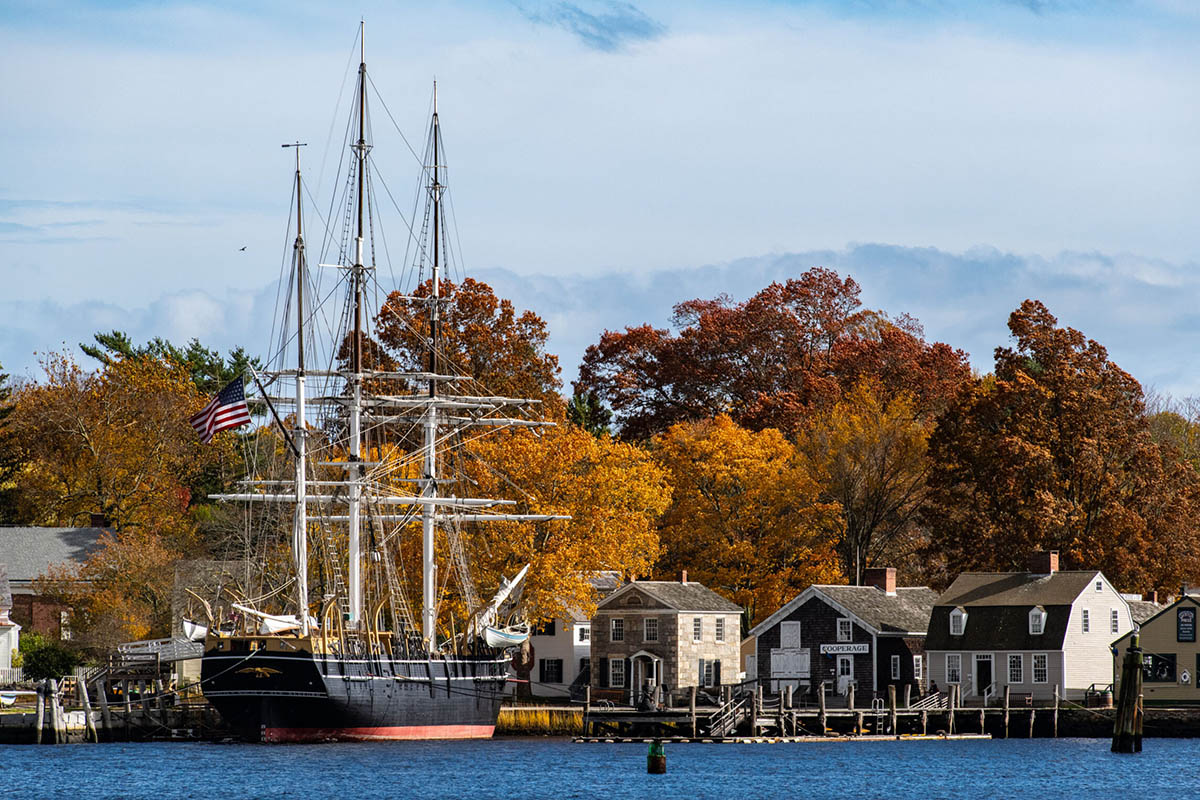
Mystic Seaport. Photo: Mystic Seaport Museum.
Gibson Hill in Sterling gives you a wooded basecamp about 30 minutes from the action. That buffer keeps the nightly rates manageable and the campground quiet, without requiring you to sacrifice a single hour of time in Mystic or along the Connecticut shore.
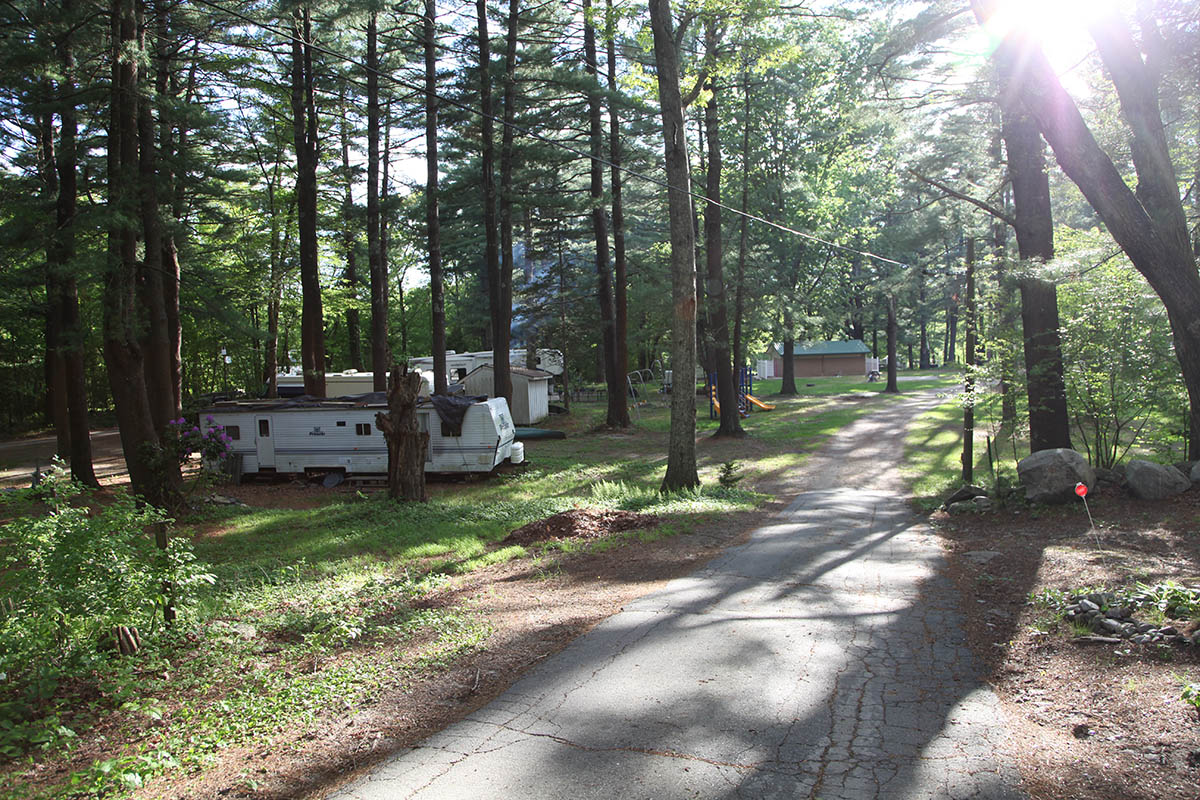
Photo Courtesy of Gibson Hill Campground.
The insider move here is the Tuesday morning lobster boat tour out of Stonington. Stonington Borough is a working fishing village just east of Mystic, and the harbor tours that run out of there give you a completely different perspective on this coastline than the Seaport museum does. Book it at least a week out in summer. Pair it with lunch at one of the Borough restaurants, and you have the kind of morning that actually makes it into trip journals.
4. White Pines: Connecticut Wine Country, on Four Paws
Connecticut’s wine country in Litchfield County doesn’t get mentioned in the same breath as Napa or the Finger Lakes, but that’s largely its appeal. The wineries are genuine, the tasting rooms don’t require reservations most days, and the surrounding landscape of rolling hills and small farms is the Connecticut that people who grew up here are always trying to describe to skeptics.
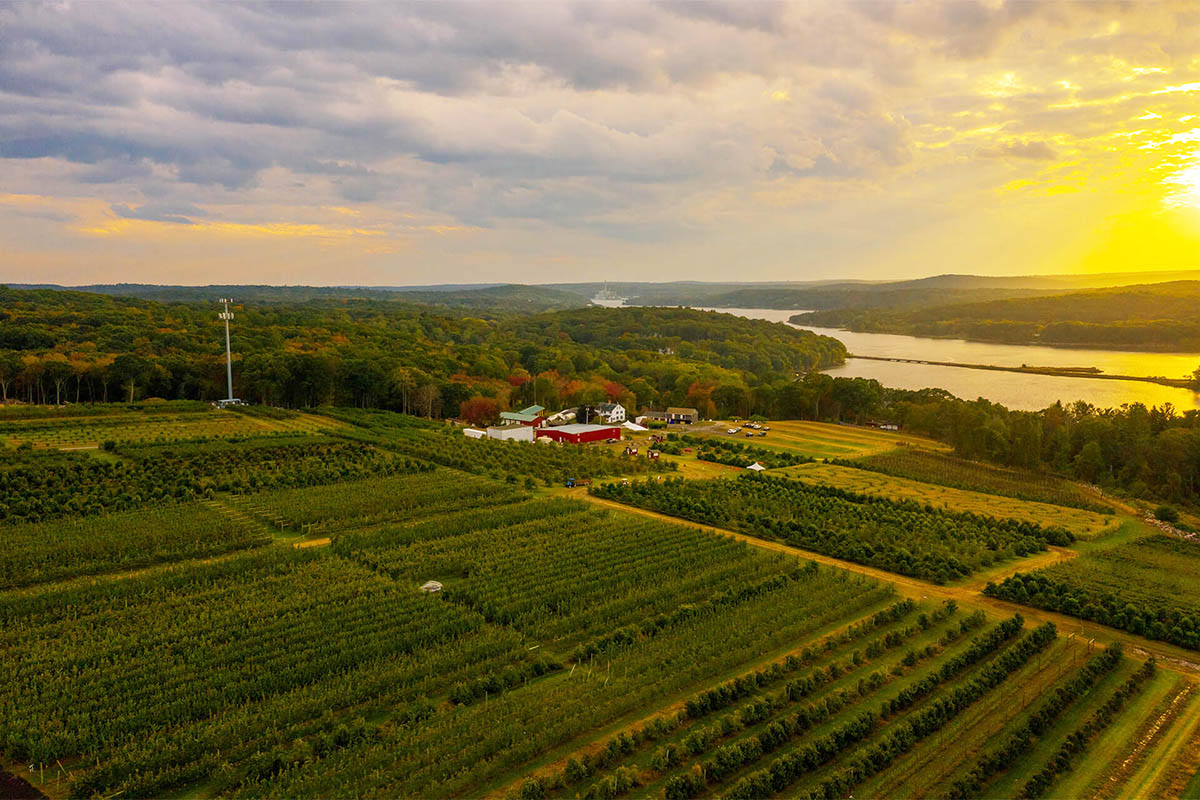
Vines growing in a vineyard. Photo: Connecticut Department of Agriculture.
White Pines in Barkhamsted is dog-friendly throughout, which matters when you’ve got a dog who needs to come along for every outing. Both nearby wineries are equally welcoming: Sunset Meadow Winery in Goshen, about 25 minutes out, and Rosedale Farms in Simsbury, roughly 15 minutes in the other direction, allow dogs on their patios. You’re not sneaking your dog to the car between tastings. You’re sitting outside on a lawn or terrace, tasting Marquette or Traminette, with your dog under the table. That’s the whole afternoon taken care of.
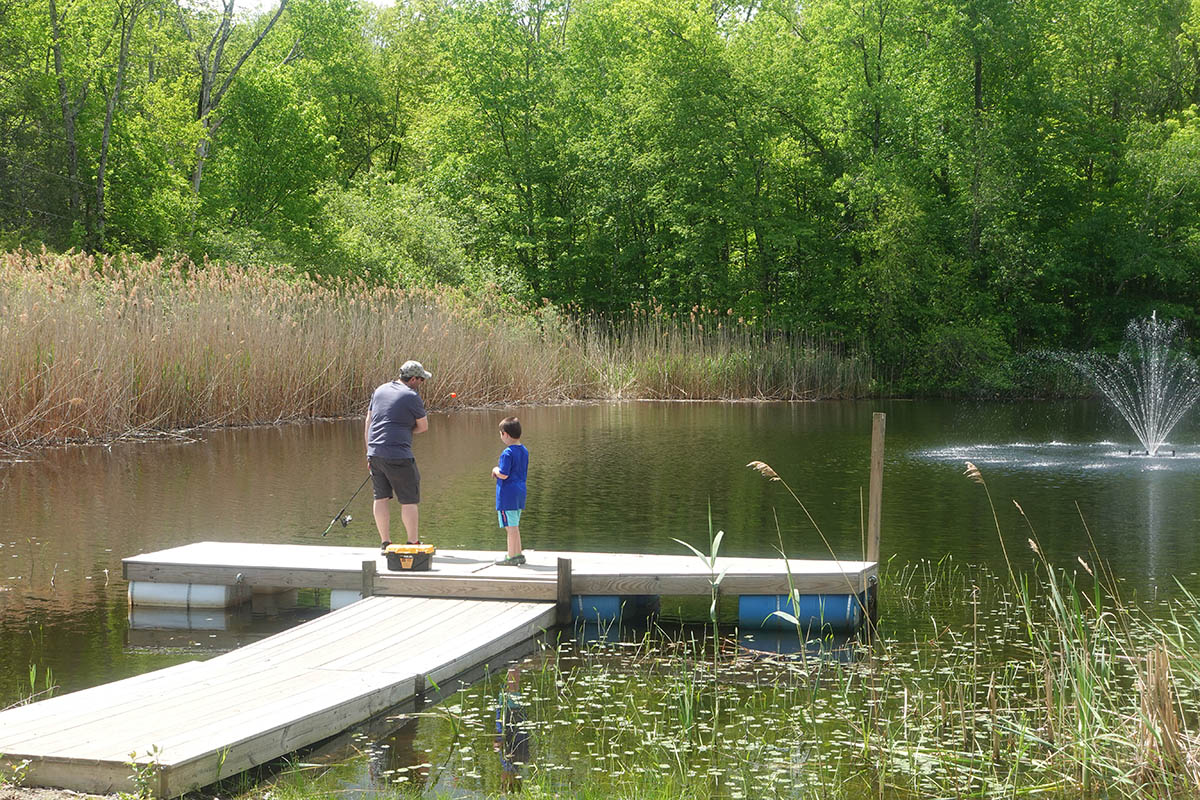
Photo courtesy of White Pines Campground.
The hiking trails around White Pines connect into the broader Connecticut trail network, so morning trail time followed by afternoon winery time is a fully achievable daily rhythm here.
5. Bonnie Brae: Inside the Berkshires, Not Adjacent to Them
There are campgrounds that say they’re “near the Berkshires,” and there’s Bonnie Brae in Pittsfield, which is simply in them. Five minutes to Tanglewood. Twenty minutes to MASS MoCA in North Adams, arguably the best contemporary art museum in rural America. Twenty minutes to the summit road on Mount Greylock, the highest point in Massachusetts, with views that stretch into four states on a clear day.
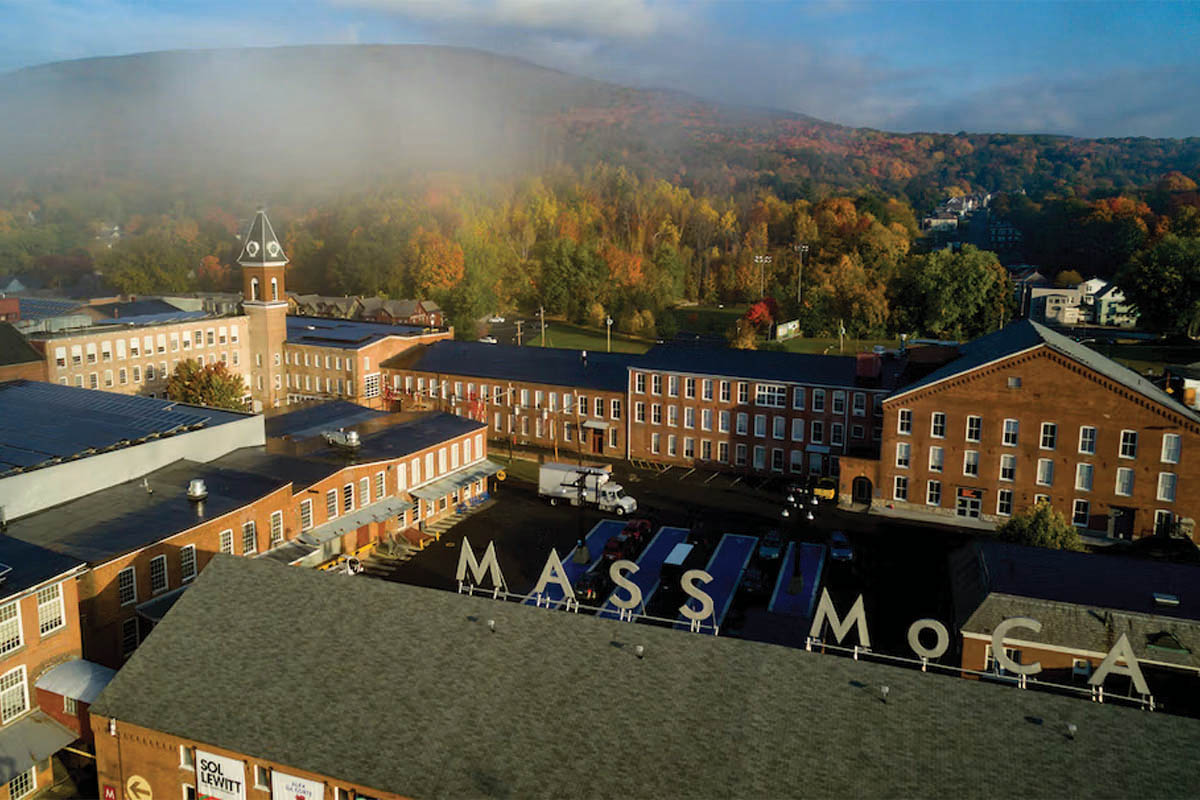
A former factory houses the Massachusetts Museum of Contemporary Art (Mass MoCA) in North Adams. Photo: Asset CDN
The Berkshires work best in the shoulder season, and Tanglewood is the case study. By mid-August, the lawn at Tanglewood is packed, and the roads in Lenox are slow all weekend. Come in June or early July, and the same performances happen with a fraction of the crowd. Better still: Tanglewood’s rehearsal mornings often offer lawn access at no cost or at a very reduced rate. The Boston Symphony rehearses on the same stage, in the same hall, with the same quality. You sit on the grass and listen. It’s one of the better-kept secrets in New England summer culture, and it runs on the same summer calendar as the main season.
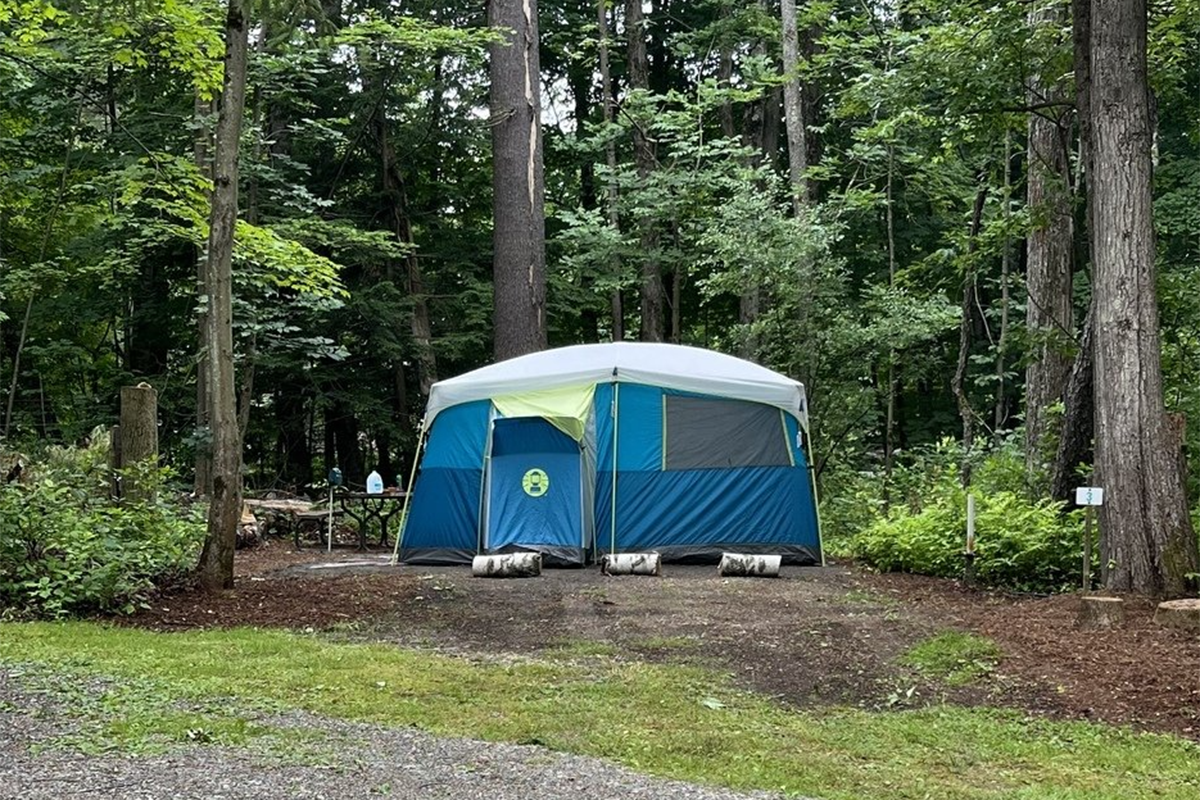
Photo courtesy of Bonnie Brae Campground.
Bonnie Brae keeps you close enough to all of it that the Berkshires feel like your backyard rather than a day trip.
6. Ausable Pines: The Adirondacks Without the Lake Placid Crowds
Lake Placid is worth visiting. The Olympic history is real, the surrounding High Peaks are spectacular, and Mirror Lake is as photogenic as advertised. The drawback is that Lake Placid in July knows exactly how popular it is, and prices and foot traffic reflect that.
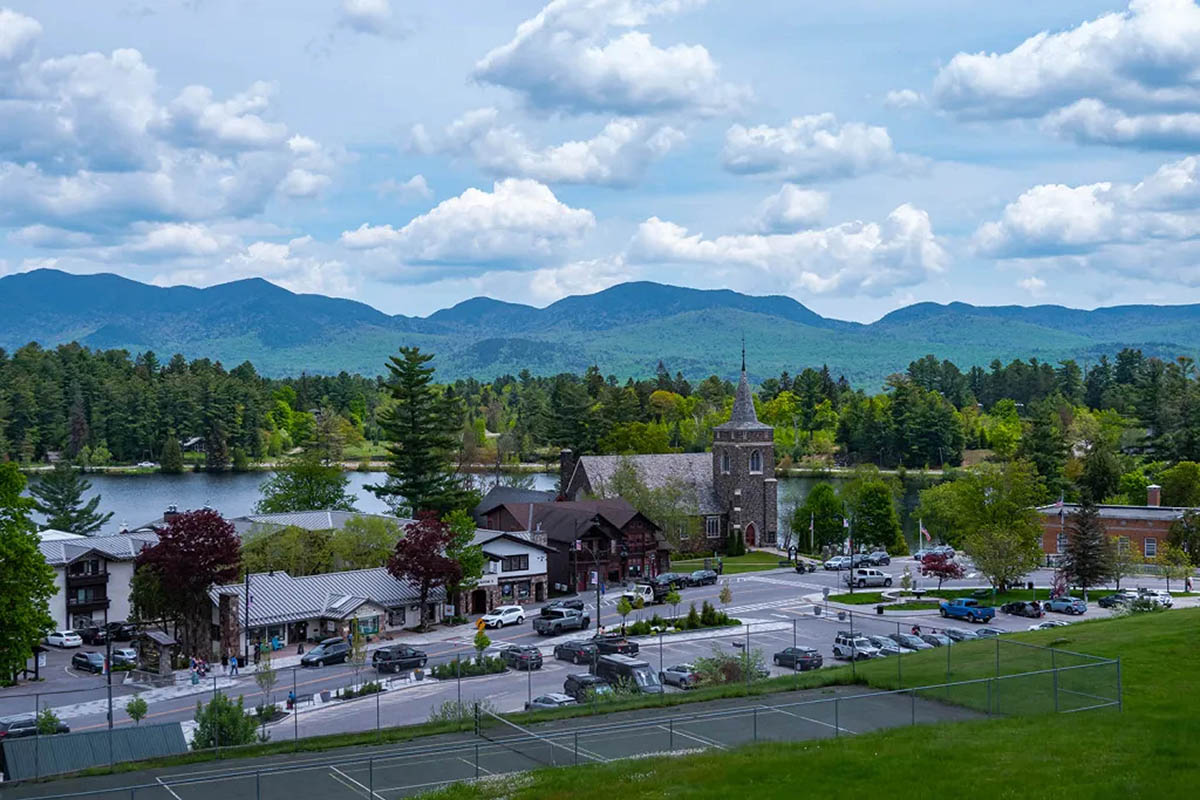
Lake Placid. Photo: The Dana Edition
Ausable Pines in Peru puts you about an hour from Lake Placid with a pool, waterfront access, and a dog-friendly policy. But the timing tip that locals will actually share is this: come in June or September. The High Peaks are identical. The trails to Algonquin, Wright Peak, or Cascade don’t change between July and September. What changes are the queue at the popular Lake Placid restaurants, the campsite availability, and the rate you pay for all of it.
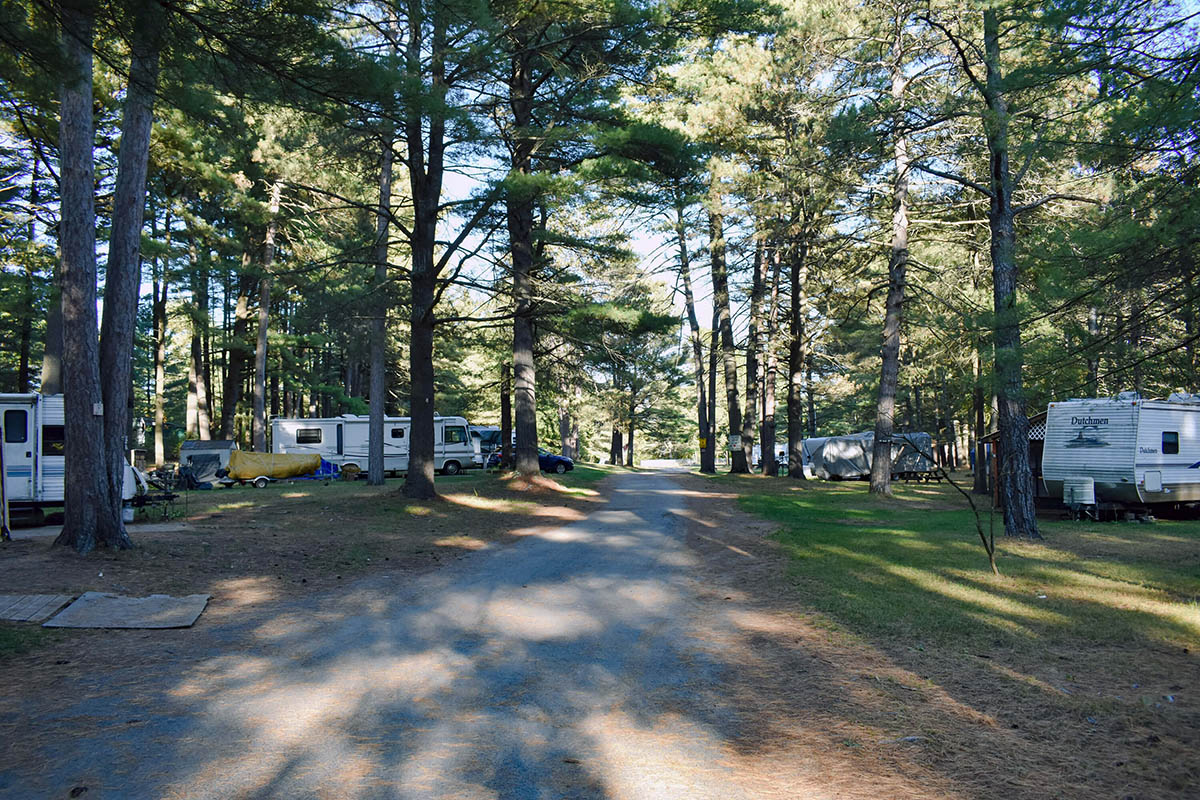
Photo courtesy of Ausable Pines RV Park.
The Ausable River through Wilmington Notch is worth flagging separately. This stretch of whitewater is known among paddlers but rarely makes it into the broader travel coverage of the Adirondacks. Class III-IV, depending on water levels, with a put-in and take-out that are easy to manage. Locals paddle it. The tourist crowd hasn’t found it yet. Bring your own boat or arrange a guided trip through one of the outfitters in Wilmington.
From Ausable Pines, the whole High Peaks region is accessible without the toll of driving through Lake Placid every time you want to reach a trailhead.
7. Crown Point: Vermont’s Northeast Kingdom, the Way Vermonters Actually Use It
Vermonters who want to get away don’t go to Stowe or Woodstock. They go to the Northeast Kingdom: Orleans and Essex Counties, the area locals shorten to “the Kingdom,” a region of forest, working farmland, and nearly empty roads that feels more like northern Quebec than southern Vermont.
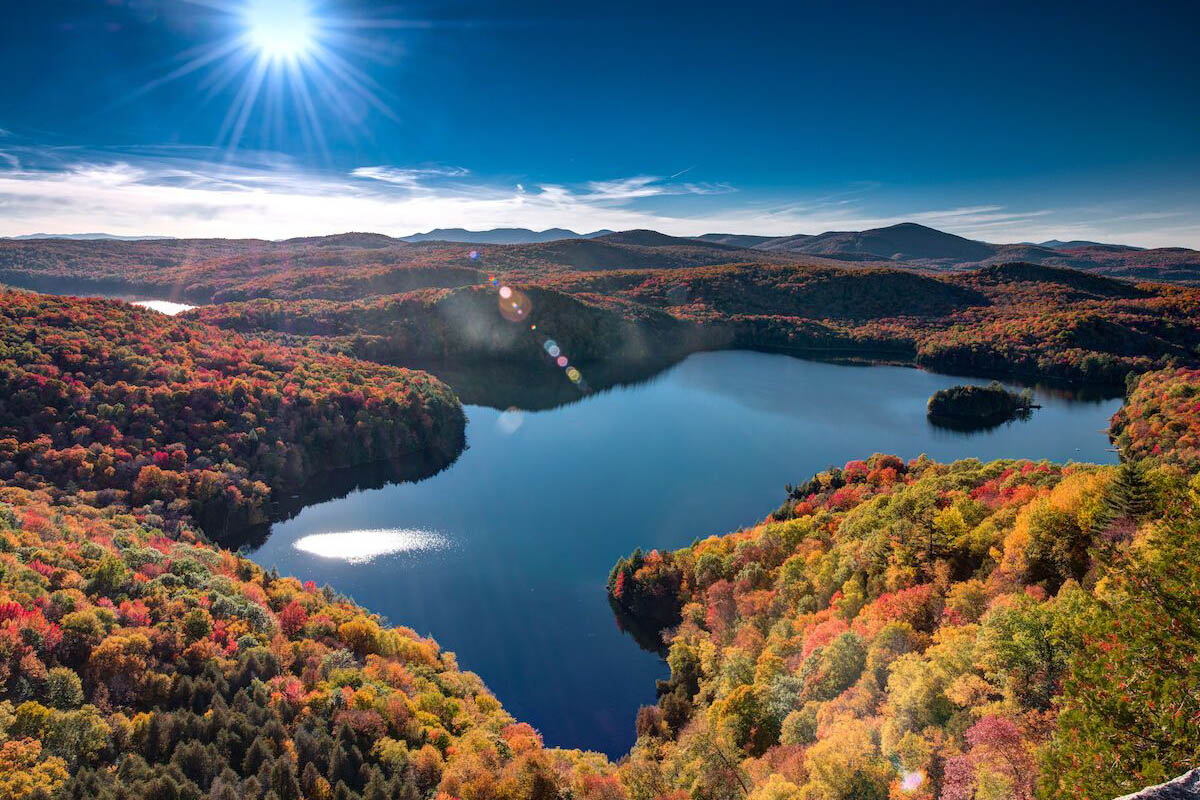
Nichols Pond in the Northeast Kingdom.
Crown Point sits on Stoughton Pond in Perkinsville with direct water access for kayaking and a pace that matches the Kingdom’s general character. Kingdom Trails in East Burke is about an hour out and is one of the best mountain bike trail networks in the East, with over 100 miles of singletrack that draws riders from well outside Vermont. Non-riders find enough in the Kingdom to fill a week regardless: Northeast Kingdom Tasting Center in Newport, the Bread and Puppet Theater in Glover if the timing works, and farm stands that are genuinely just farm stands.
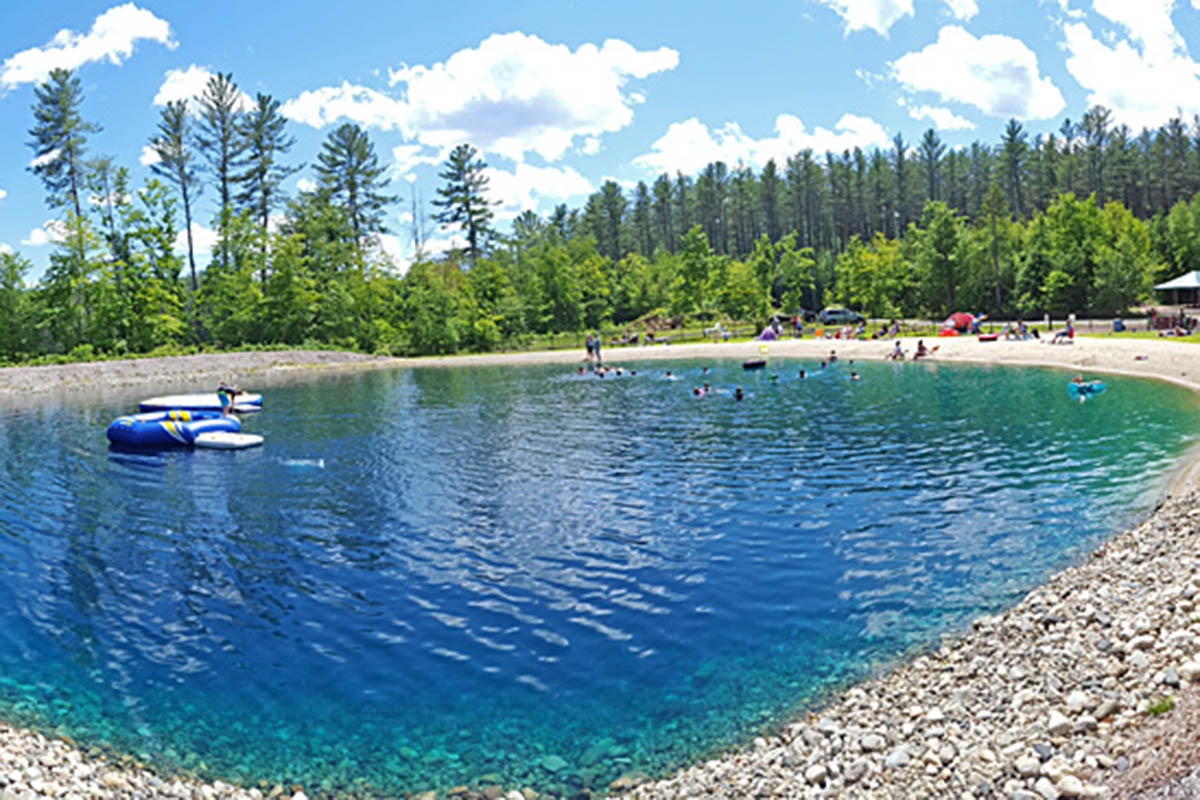
Crown Point on Stoughton Pond. Photo courtesy of Crown Point Camping Area.
The local tip worth having: Jay Peak’s water park runs in the off-season at around $40 with essentially no wait times. It’s the same slides, same facilities, a dramatically different experience than the summer peak. Families traveling in late spring or early fall should look at the schedule before booking.
The Northeast Kingdom rewards the traveler who is willing to figure it out as they go. Crown Point gives you the right home base to do exactly that.
Taken together, these seven campgrounds cover the Northeast in a way that most travel guides don’t: not by listing what’s famous, but by placing you where the actual experience is. Each one sits close enough to something genuinely worth doing that you’ll spend less time driving and more time in places that justify the trip. The parks are consistently well-maintained, dog-friendly as a rule rather than an exception, and run by people who know what RVers actually need.
The Good Sam Member offer is the place to start. Book through the link below for 20% off your stay plus a 7,500 Trail Miles welcome bonus, valued at $75, applied to your account at check-in.
Claim your Good Sam member rate at Happy Grounds.
Happy Grounds is a network of campgrounds across the Northeast. All parks listed are dog-friendly or dog-accommodating. Member rates and Trail Miles offers are subject to availability at booking.
RV.com Staff
RV.com is the premier news and information site for traveling on the open road.