Trotwood Trailers: The RV Giant You’ve Never Heard Of
The company dominated towables during the 1950s camping heyday, before going down in a blaze of glory.
Image Caption: Photo Credit: Trotwood-Madison Historical Society
When Ray Kuns and Warren Wagner tinkered with canvas, wheels and a wooden platform in Wagner’s garage one 1920s summer in Trotwood, Ohio, they were likely just looking for a diversion. Little did the physics professor and schoolteacher know they were poised to build Trotwood Trailers, a recreational vehicle empire that would survive six decades. “Getting into the RV space so early, keeping that company running through World War II and then becoming huge–that’s quite an achievement,” says Terry Bone, an RV historian who holds the incredible title “Royal Tin Can Opener” with vintage trailer and auto- camping club Tin Can Tourists. “They had to be doing stuff right.”
Though the founders got started during the Roaring Twenties, Kuns, Wagner and a third partner, Joseph Flora, incorporated Trotwood Trailers in 1932. Like many other manufacturers then, the brand largely built trailers out of compressed wood, material light enough to undercut towing capacity limitations of the day and more affordable during the Great Depression.
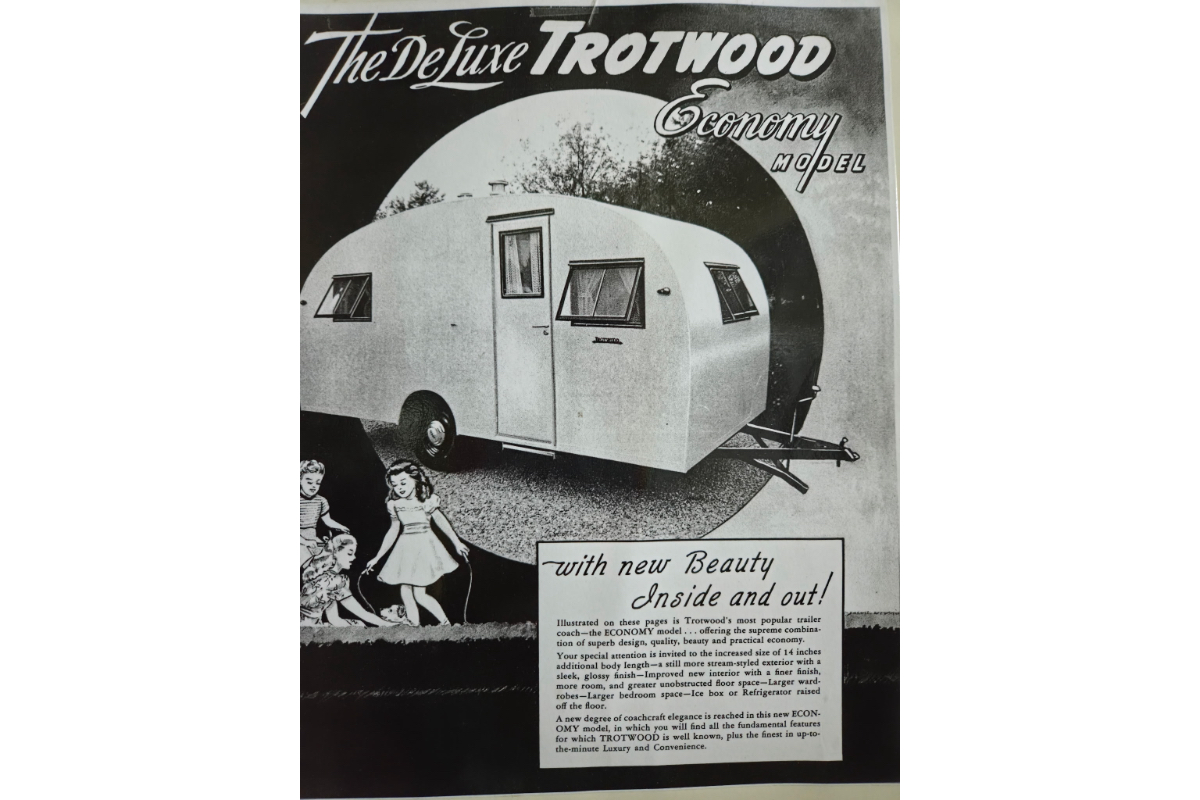
Photo Credit: Trotwood-Madison Historical Society
Regina Kleinhenz, memorabilia coordinator for the Trotwood-Madison Historical Society, says that records of early models show Trotwood RVs were pop-up tents or “plywood and metal frame boxes that you could tow around.” Trotwood Trailers’ vehicles featured an entry door on the side rather than at the rear, a then-revolutionary design that allowed for unprecedented versatility in the placement of the sleeping areas.
Trotwood truly jumped ahead of the curve, however, when it came to the trailer’s silhouette. In the ’30s, competitors’ models took on a semi-circle shape; Trotwood, on the other hand, maintained ceiling height throughout the front and the back, rounding only slightly in the upper corners. This “canned ham” silhouette, which Trotwood was among the first to adopt, added considerably more headroom. Their models also prioritized production quality, with many interior components—the cabinetry, beds and wardrobe, for example—made by hand.
Trotwood Trailers’ innovation and attention to detail paid off. By the 1950s—the decade during which “camping blew up,” Bone says—the company commanded roughly 50 percent of the overall RV market. Nearly 60 trailers left the factory each week. “There were literally thousands of companies making canned-ham trailers,” Bone says of that era. “People had tons of choices. They were choosing Trotwood.”
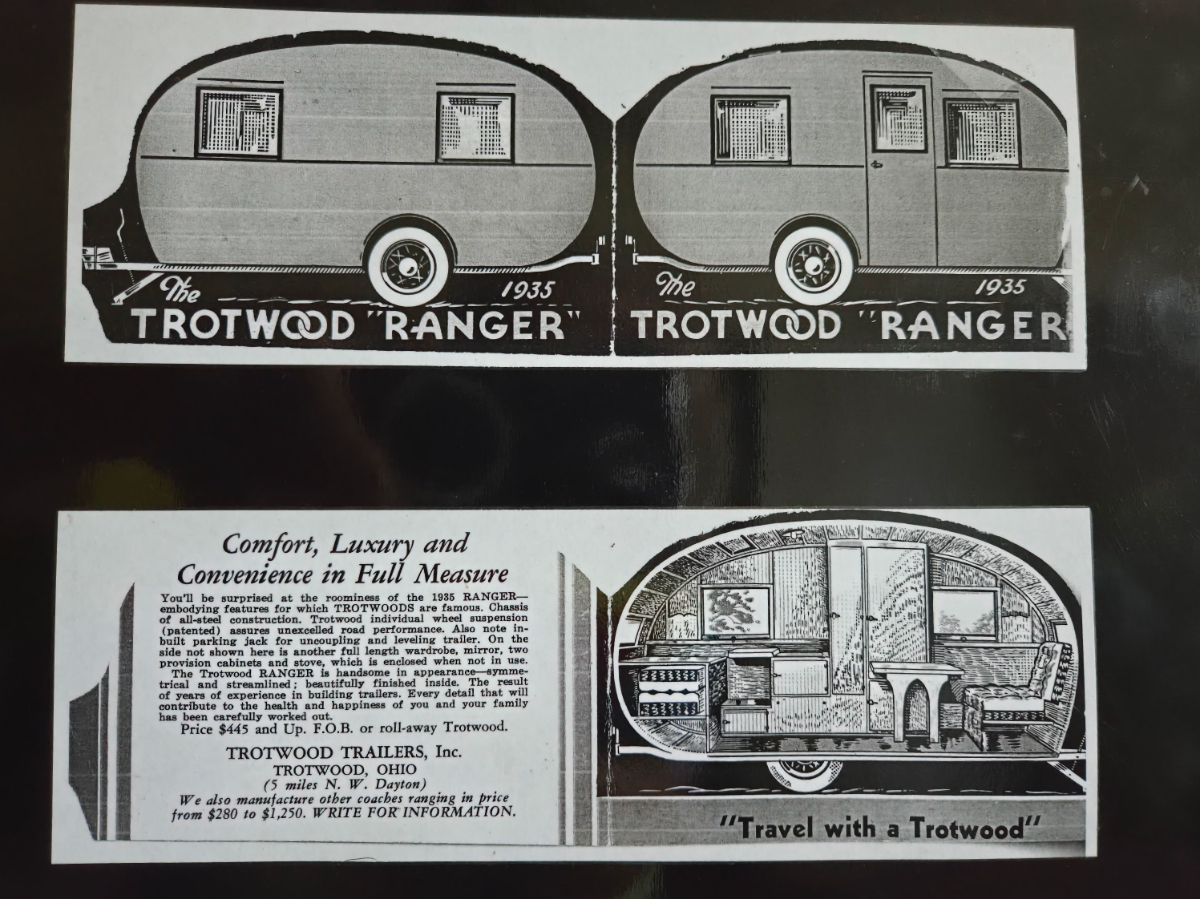
Photo Credit: Trotwood-Madison Historical Society
In the course of its journey, Trotwood branched into making mobile homes, boats, even scooters. (Its three-wheel 1930s scooter is described by The Classic Motorcycle as “bizarre in the extreme.”) In the 1960s and ’70s, the brand began to lose ground to RV competitors and pivoted away from the trailer market as demand decreased due to elevated gas prices. When an inferno broke out at headquarters in 1981, the firm opted to cease production of the trailers that had set fire to the recreational vehicle industry. An offshoot of Trotwood, robotics tooling company Stryver Manufacturing, still exists today, but the original offices and records, Kleinhenz says, “just burned up.”
Perhaps that’s why Trotwood is no longer a household name. “They had half the market at probably the busiest time in the RV industry,” Bone says. “They don’t get the recognition they probably deserve.”
This article originally appeared in Wildsam magazine. For more Wildsam content, sign up for our newsletter.