The Pros and Cons of Owning a Truck Camper
Image Caption: Photo Credit: Lance
Without a doubt, truck campers are one of the most overlooked categories in the RV industry. These types of campers are often overshadowed by bigger, swankier motorhomes, travel trailers, and fifth-wheel models, causing many buyers to pass right by without taking a second look. But if you already own a pickup, there are some very compelling reasons why one of these rigs might be the perfect option for your camping adventures, provided you understand the pros and cons of owning a truck camper. Here’s what you need to know:
Pros
Go Anywhere, Camp Anywhere
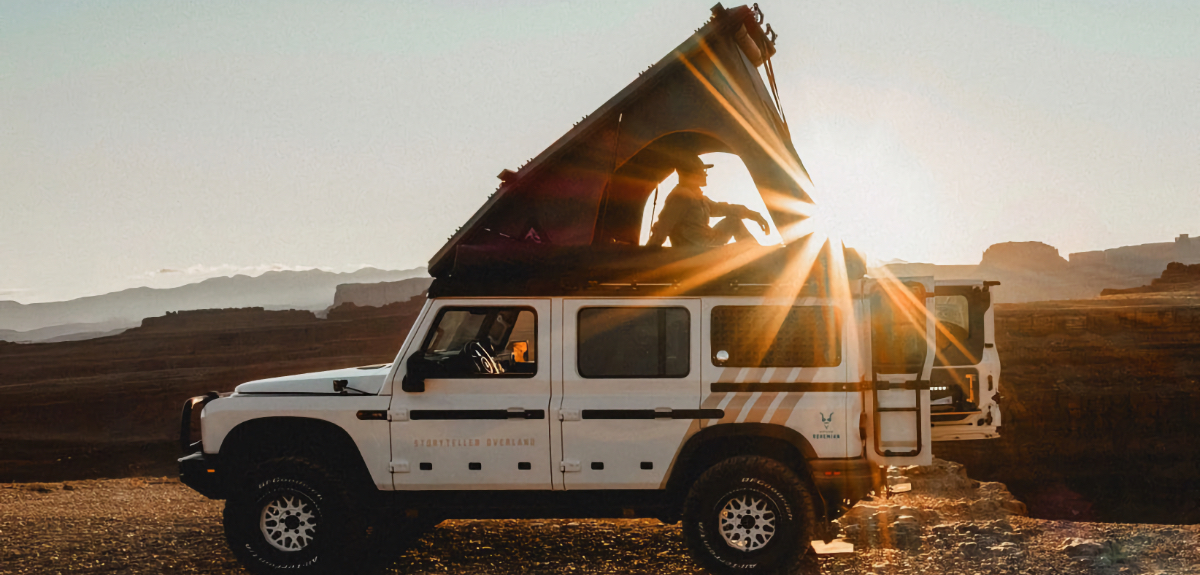
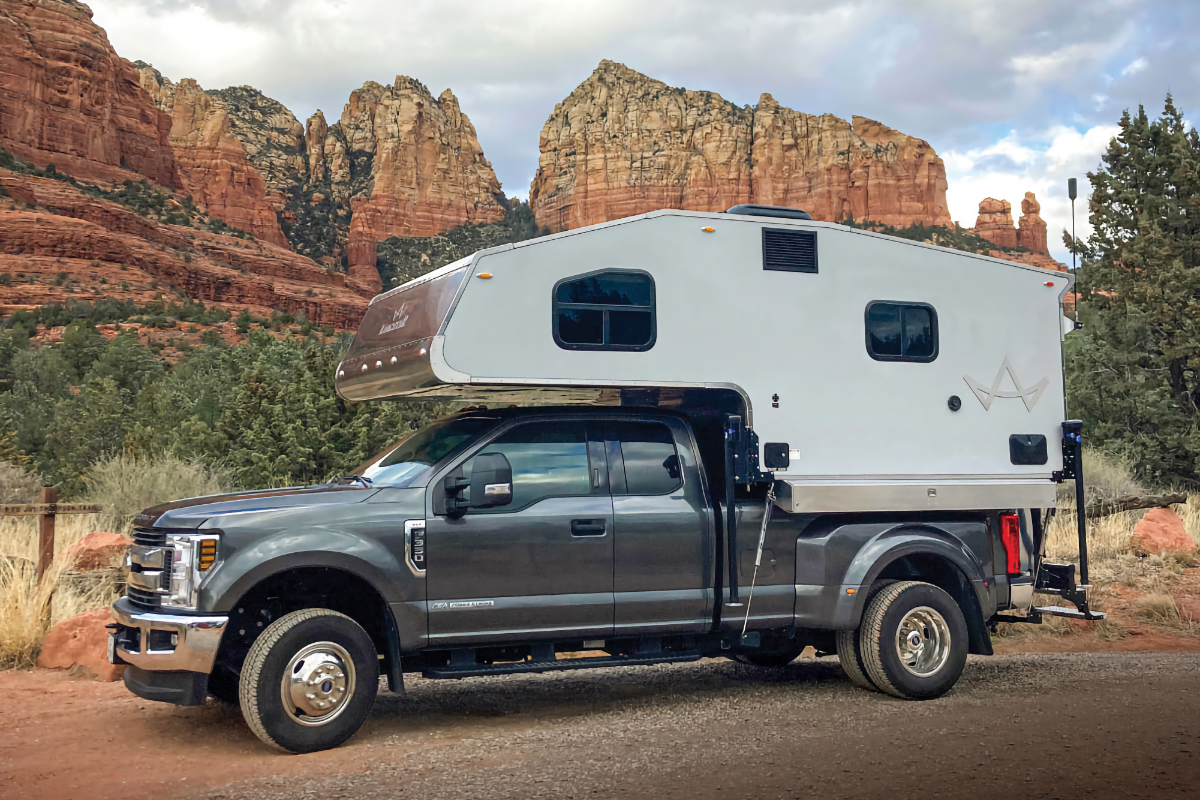
One of the big pluses of owning a truck camper is that they can go anywhere that your truck can go. That means if you own a pickup built for off-roading, you can probably bring your camper along with you, navigating narrow roads and Jeep trails that aren’t especially friendly to other types of RVs. Sure, there are some small, lightweight travel trailers made for overlanding and off-roading, but maneuvering them along backcountry routes can even be challenging. That isn’t the case with a truck camper, most of which are built with enhanced mobility in mind.
But even if you don’t plan on taking your truck off-road, these models provide excellent mobility compared to other types of RVs. In fact, they often compare favorably to Class B vans in terms of driving comfort and confidence, as compared to Class A and C coaches, which can be ponderous to maneuver in town and very hard to park. There’s a reason why owners of larger motorhomes often tow a dinghy vehicle along with them on their travels. That’s generally not a concern with truck campers.
Additionally, because these types of RVs are usually only about as long as the truck they ride on, you don’t have to worry about length restrictions in national or state park campgrounds. They also fit neatly in most parking lots, too, allowing for overnight stays in a wide variety of places that aren’t always as accommodating to larger rigs.
You Can Still Use Your Hitch
Since a truck camper slides into the bed of a truck, it frees up the hitch to be used for other purposes. That means you can tow a boat or ATV behind your pickup or add a hitch-mounted rack for bringing e-bikes, mountain bikes, or other toys along on your excursions. If your rig has the towing capacity, you can even bring an off-road travel trailer for guests.
Quick and Easy Camp Set-Up
Compared to most other RVs, truck campers are relatively quick and simple to set up at the campsite. While some models do have slide-outs, awnings, and other exterior features, for the most part, you just find a level place to park, and you’re good for the night. This makes arrivals and departures faster and easier, too, unlocking true stop-and-go camping.
Easy Removal and Storage
When not in use, these types of campers can easily be removed from the truck, allowing owners to use their vehicles as a daily driver and giving them full access to the bed for carrying cargo. This also makes them easy to store during the winter or other extended periods when not in use, with some models even fitting inside a garage.
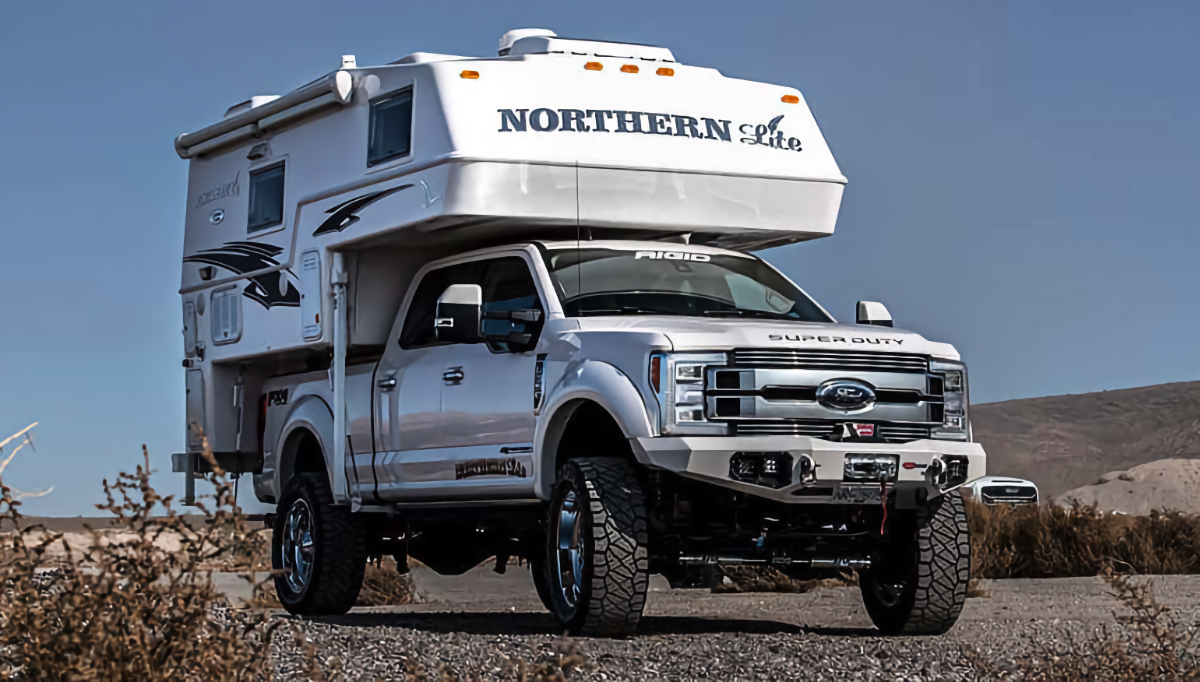
Photo Credit: Northern Lite
Less Maintenance
While truck campers still require the usual maintenance for their water systems, batteries, HVAC, and other important components, these tasks are far less complicated and time-consuming compared to other RVs. Because they lack engines, tires, suspensions, or axles, owners will spend less time and money on keeping these rigs in optimal condition. You’ll still need to maintain the exterior of the camper to avoid cracks, leaks, and other damage to the camper; those preventative maintenance chores are less of an issue compared to larger, more complicated rigs.
All of that said, you’ll still need to stringently adhere to your truck’s maintenance schedule to ensure optimal performance. When used properly, there shouldn’t be any major stress put on the truck while carrying the camper, but depending on the vehicle and its carrying capacity, the engine and tires may see increased wear and tear.
Better Fuel Efficiency
Adding a truck camper to your pickup will almost assuredly impact your gas mileage, but it should still be much better than if you are towing a travel trailer or fifth-wheel. Motorhomes aren’t exactly known for their fuel efficiency either, which only extends the appeal of this type of RV.
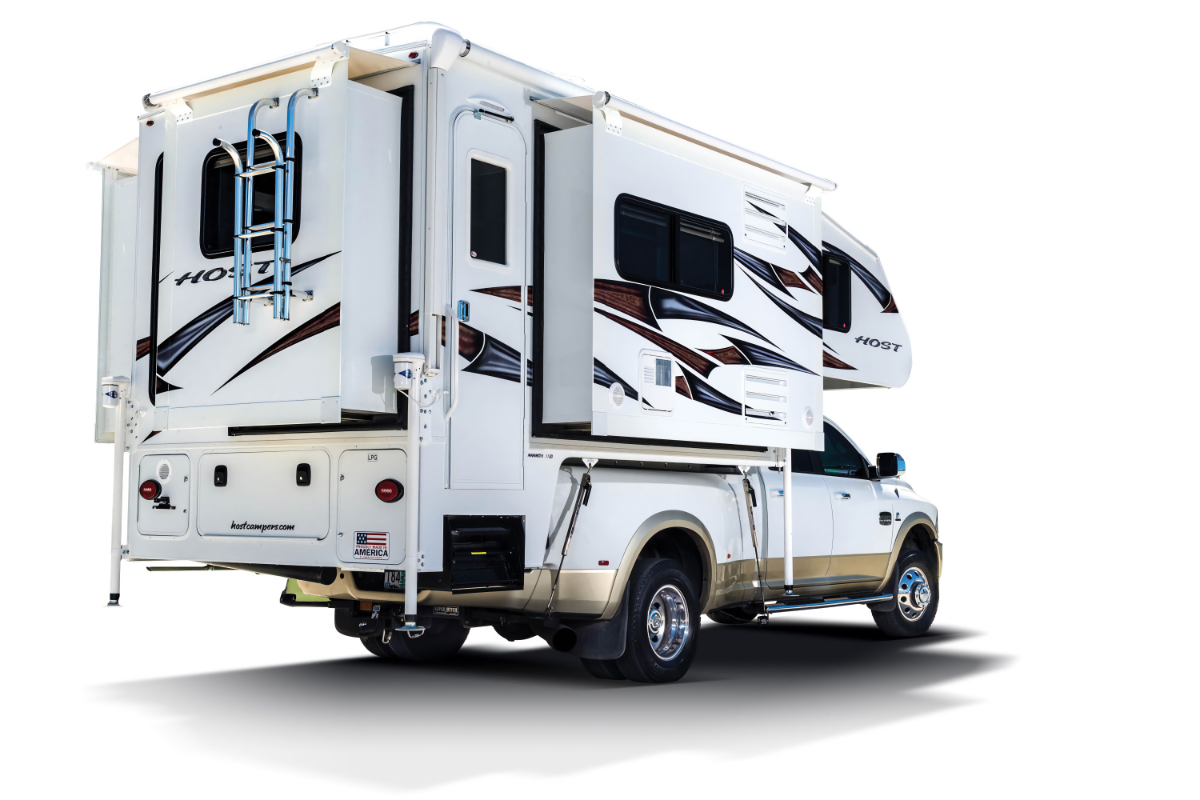
Image Courtesy of Host Camper
Cons
Smaller Size
The most obvious disadvantage to owning a truck camper is that they are much smaller than just about any other type of RV. Other than camper vans and small travel trailers, you’ll have more space in most towables and motorhomes. That makes these rigs good for solo travelers and couples, but they quickly become crowded with more people along for the trip.
Limited Payload Capacity
Because these campers take up a sizable chunk of a truck’s payload capacity, there may not be much leftover for bringing along additional gear. Obviously, that capacity depends heavily on the size and type of truck you own, but a good portion of it will be utilized by the camper itself. That may cause owners to have to make some tough decisions on what they can and can’t bring along for the trip as the rig nears its maximum weight limits.
Fewer Features and Amenities
While modern truck campers are impressive in many ways, their limited size and strict weight requirements lead to fewer onboard features. The living quarters in these rigs are tight, so you generally won’t find spacious dry baths—or sometimes a bathroom at all—not to mention residential refrigerators, massive smart TVs, or any number of other amenities found in larger RVs. That isn’t to say that these campers aren’t well appointed, but just don’t expect the same level of luxury living you’ll get from a motor coach, fifth-wheel, or travel trailer.
The smaller size often means smaller holding tanks, too. While many models have fresh, gray, and black tanks, their limited capacities can limit how long you can stay off grid.
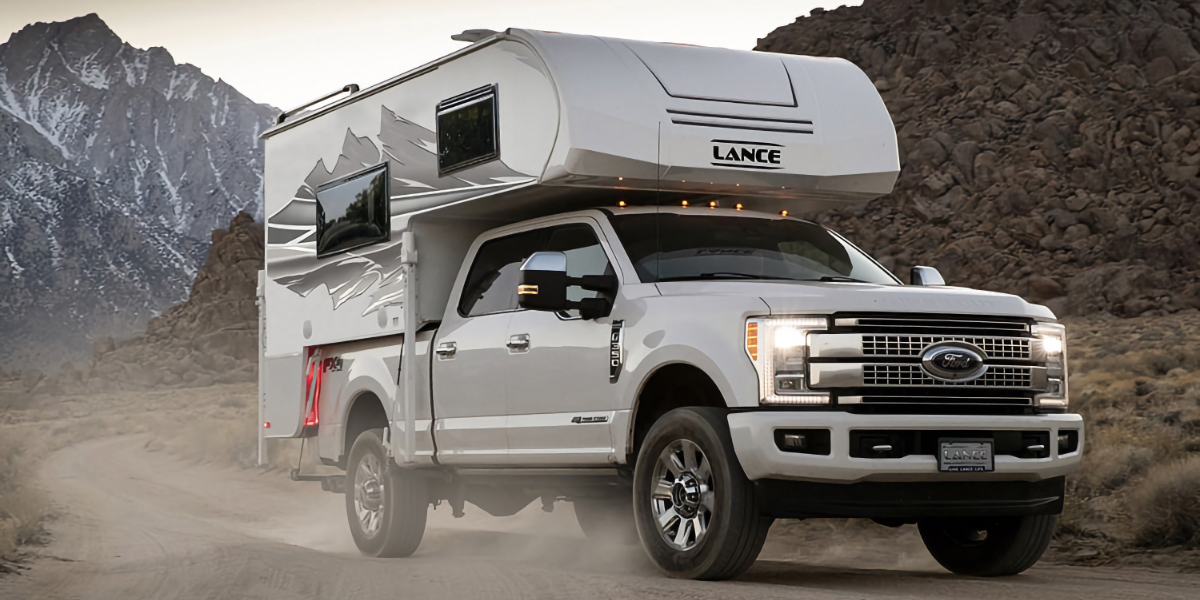
Photo Credit: Lance Camper
Driving Dynamics
As noted above, a truck camper is built to go just about anywhere your truck can go. That said, adding one to the bed of your truck dramatically changes the driving dynamics of the vehicle. For instance, these campers have a large side profile that makes them more susceptible to wind, creating instability in especially gusty conditions. They also change the truck’s center of gravity to a degree, which can cause more body roll, especially on rough roads or uneven terrain. This can take some getting used to at first and requires a bit of extra attention when behind the wheel.
Accessibility
Getting in and out of a truck camper can be more challenging than you might expect, especially for those with limited mobility. The camper’s position in the bed of the truck means it sits higher compared to most other RVs, and although most models come with integrated steps, they can often be steep and still remain high up. And because they are smaller in size, some manufacturers use smaller doors to save space, which can also lead to limited accessibility.
These are the most notable pros and cons of owning a truck camper. Some of these items are likely to be bigger obstacles than others, while some may not feel like an issue at all. As usual, it all comes down to personal needs and taste, but it is important to find the RV that works best for you.

Kraig Becker is a writer in the RV, outdoors, and adventure travel space. Over the course of his career he has contributed to such outlets as Popular Mechanics, Outside Online, Business Insider, TripSavvy, Digital Trends, GearJunkie, The Adventure Blog, and countless others. An avid runner and cyclist, he enjoys camping, hiking, mountain biking, kayaking, and just about any other outdoor activity. His travels have taken him to seven continents and on many amazing adventures.