10 Tech Features You’ll Want in Your Next RV
These amenities make modern RVs smarter, safer, and more fun.
Image Caption: Photo Credit: Getty
Right now, it feels like the RV industry is innovating at a blistering pace. The latest models rolling off the assembly line now come not just with more residential furnishing and floor plans, but a slew of interesting technologies, too. As a result, our rigs are getting smarter, safer, and better connected. In fact, manufacturers big and small have been introducing some truly fun and interesting new RV tech features that have the potential to change the way was camp and travel.
If you’re shopping for a new RV of your own, here are ten tech features we wouldn’t want to do without in our next rig:
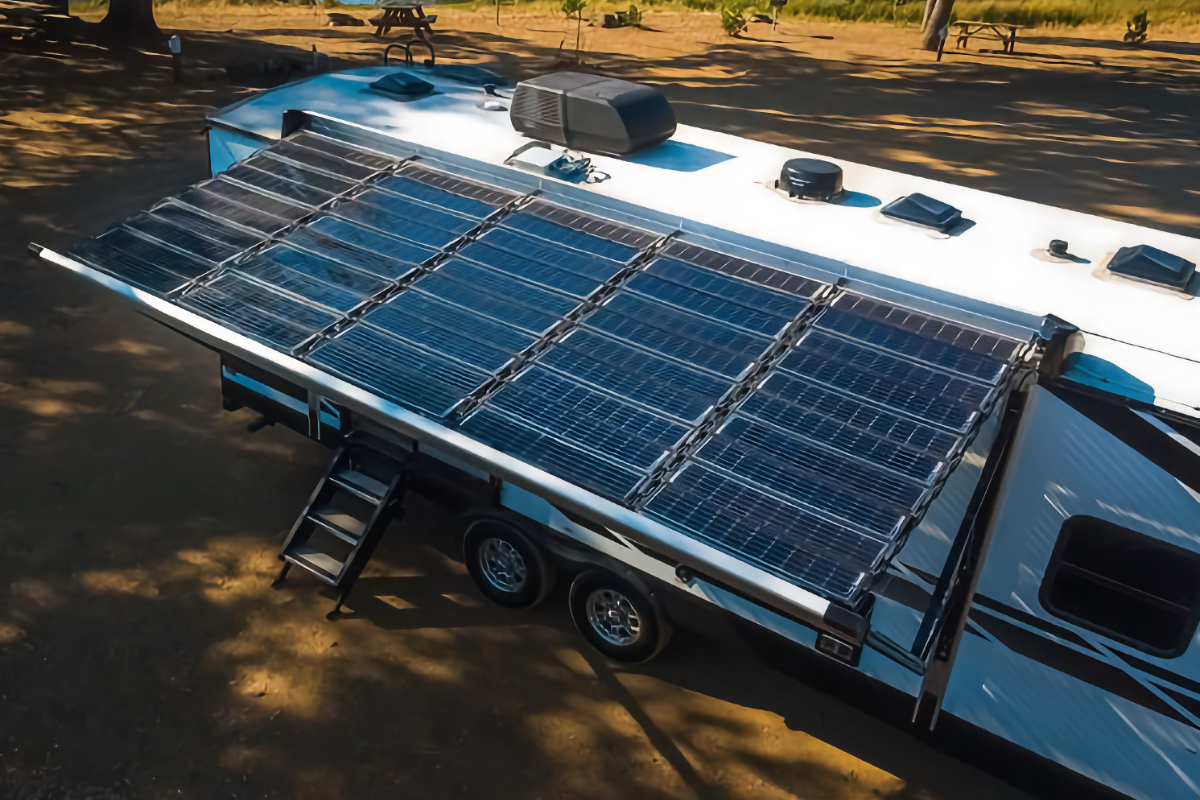
Image Courtesy of Xponent Power
Solar Panels and Lithium House Batteries
It’s true that roof-mounted solar panels and lithium batteries have been a mainstay in the RV industry for the past few years, and even longer with some RVers. But, even now, there are more than a few models that don’t include those features as standard equipment from the factory. At this point, all but the least expensive entry-level rigs should include solar and lithium batteries, as both are complete game changers when it comes to choosing when and where you want to camp. We definitely wouldn’t buy a towable or motorized unit that doesn’t include solar and lithium, preferably with enough power to run the vehicle for at least a day or two off-grid.
Starlink Ready
Having an internet connection wherever you wander is a truly useful thing, allowing you to stay in contact with friends and family, work remotely, stream your favorite shows and movies, and navigate in remote areas. Thankfully, an increasing number of manufacturers are shipping RVs that are Starlink-ready, allowing owners to quickly and easily plug in a compatible satellite receiver without having to run cables or connect it to power. Additionally, some higher-end RV models now come with a receiver installed at the factory, making it easier than ever to sign up for the satellite internet service.
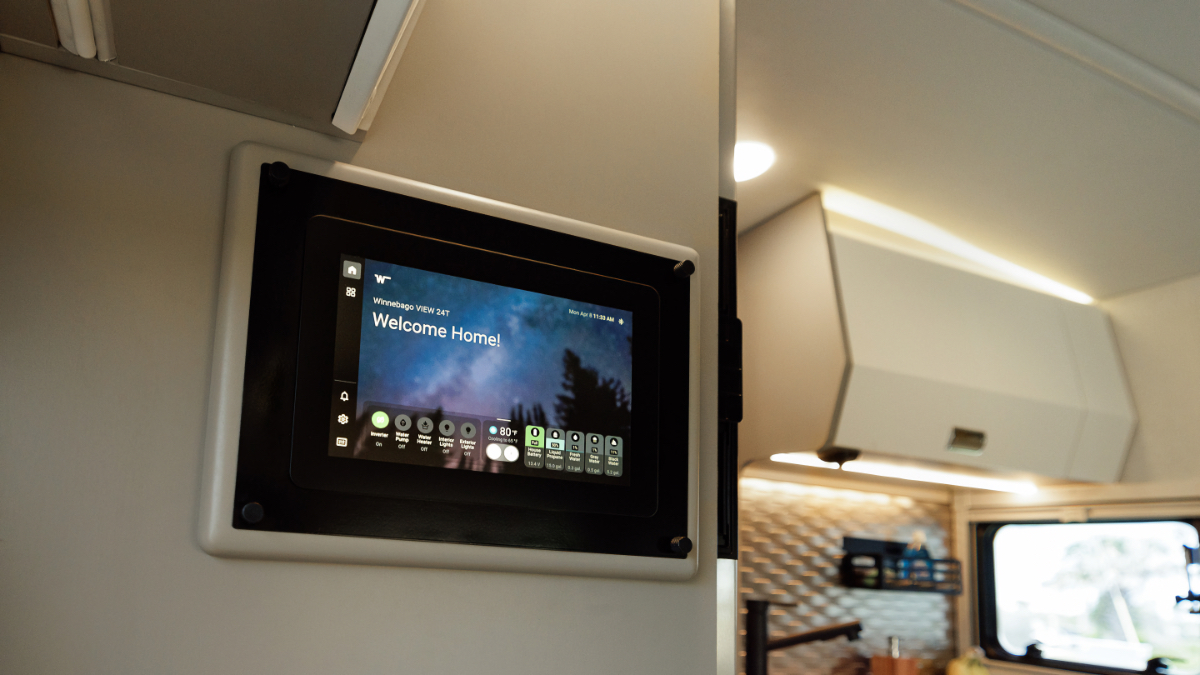
Photo Credit: Winnebago
A Smart Multiplexing System
Multiplexing systems have been around for a while now, giving RV owners the ability to control and monitor a variety of features—like lights, HVAC, and power—from a single control panel or touch screen inside their rig. But more advanced models also allow you to connect via a smartphone or tablet, allowing us to adjust settings from virtually anywhere. This also enables features like scheduled heating and cooling or “pet mode,” which keeps our furry travel companions safe when we’re away. You can even receive real-time alerts and texts should the interior get too warm or cold, or if someone attempts to access the vehicle’s interior while you’re away.
Tankless Water Heaters
This is another feature that has become fairly common across the RV industry, but some models still ship without one. A tankless water heater provides instant hot water for doing dishes or taking a shower, which means less water—and energy—wasted while waiting for it to warm up. Compact and efficient, these devices help prevent water lines from freezing in cold temperatures, too, which is always a plus for shoulder-season or winter camping.

Photo Credit: Dometic
Quiet A/C Units
RV air conditioners have always been loud, with most owners accepting the extra noise as the price they have to pay in order to stay cool at the campground. But recent models have dramatically reduced how much sound is produced when running the A/C, making the RV’s interior and the surrounding campsites quieter as a result. These quieter models are slowly starting to become the norm across the industry, and something you’ll definitely want in any new travel trailer, fifth-wheel, or motorhome.
Wireless Charging Pads
Most new cars and trucks now come with wireless charging pads, allowing drivers and passengers to keep their smartphones charged while on the go. A few RV manufacturers have started installing similar charging options throughout the interior of some of their models, including on nightstands next to the bed. This is incredibly convenient and eliminates the need to plug in a cable. Hopefully, newer implementations will start using magnetic connections, as some automakers have started to do. That further enhances the experience and enables faster charging speeds, too.

Photo Credit: Lippert
Smart Locks
Smart locks, which automatically lock and unlock as you come and go, are fairly popular in modern homes, but have generally only been available on high-end RVs thus far. But as our rigs get smarter and more connected, it makes sense to include these nifty devices across more mainstream models, too. Imagine having your camper automatically unlock as you approach, granting access without having to dig out a key. Alternatively, these devices can detect when you walk away and secure the doors when you’re not around. A keypad often serves as a backup option, and it is even possible to provide virtual keys to friends and family, granting them access permanently or on a temporary basis.
4K Video Projectors
Swapping out a smart TV for a video projector brings a number of nice advantages. For starters, a projector frees up space that can be used for other things, while still providing an image that is as big or bigger than most TVs. Sound and image quality have improved dramatically in recent years, as has brightness, making movie night at the campground a truly special experience.
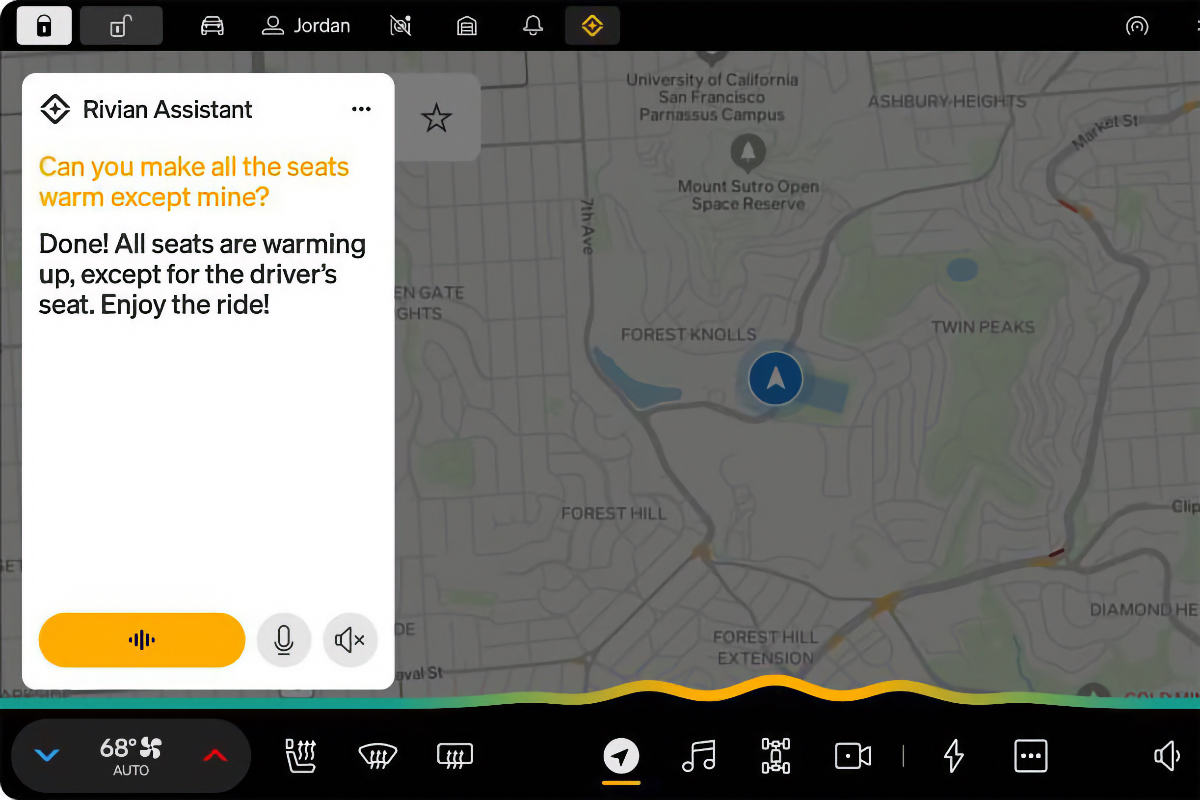
Photo Credit: Rivian
An AI Voice Assistant
While this isn’t a very common feature in the RV industry yet, a number of automakers have been adding AI assistants to their vehicles to enable voice command for drivers. These assistants can do things like adjust climate, activate heated seats, and find optimal navigation routes, with coffee stops along the way. They can also share the upcoming weather forecast and list things to see and do near your current location, plus a whole lot more. That would certainly come in handy in an RV, too, especially when combined with a smart multiplexing system and Starlink internet.
An Integrated Robot Vacuum
Admittedly, we’ve only seen this feature in one prototype RV, but it is still something we’d love to have in more rigs. Robot vacuum cleaners are fairly common in homes these days and would certainly be useful in larger RVs, too. Essentially, the little robot automatically vacuums—and in some cases mops—the floor, completely on its own. Owners can set up a schedule, and the robot will even map the interior to avoid obstacles and furniture. When not in use, it automatically returns to a charging station where it also unloads dust, dirt, and water.
Any of these tech features are really handy to have in an RV, bringing excellent efficiency and convenience for owners. Integrating all of them would obviously add to the cost of the rig, but overall most of the items listed above aren’t especially expensive on their own. Hopefully, we’ll see more manufacturers introducing these options to more models moving forward, bringing a new era of smart, connected, and fun vehicles to the market.

Kraig Becker is a writer in the RV, outdoors, and adventure travel space. Over the course of his career he has contributed to such outlets as Popular Mechanics, Outside Online, Business Insider, TripSavvy, Digital Trends, GearJunkie, The Adventure Blog, and countless others. An avid runner and cyclist, he enjoys camping, hiking, mountain biking, kayaking, and just about any other outdoor activity. His travels have taken him to seven continents and on many amazing adventures.