Road Icon: Spartan Travel Trailers Were Palaces on Wheels
The company's airplane-inspired trailers brought luxury to new heights.
Image Caption: Photo Credit: Spartan Trailers
Mobile homes, of course, were created to cruise the open road. But the luxurious Spartan travel trailers—which first debuted 80 years ago—took their cue from something a little less grounded.
Beginning in the late 1920s, the Spartan Aircraft Company—founded by oil magnate William Skelly, ultimately sold to John Paul Getty—manufactured airplanes at its plant in Tulsa, Oklahoma. Strong and lightweight, the planes were used as Navy trainers, and Spartan’s components found their way into battle-tested aircraft. After significantly expanding its factory to serve the wartime demand, the company went looking for its next chapter on America’s highways.
Spartan’s first travel trailer, the Silver Queen, debuted in 1945. Considered by many to be the Cadillac of trailers (Vintage Camper Trailers Magazine called one a “palace on wheels”), the models stood out for their size—the smallest was around 25 feet long, but designs went all the way up to 57 feet—and dramatic, midcentury interior styling. (Think curved countertops, colorful appliances, Sputnik light fixtures.) In the trailer world, Spartan was one of the notable pioneers of semimonocoque construction, which made its riveted, aluminum vehicles light, aerodynamic, waterproof and roomy.
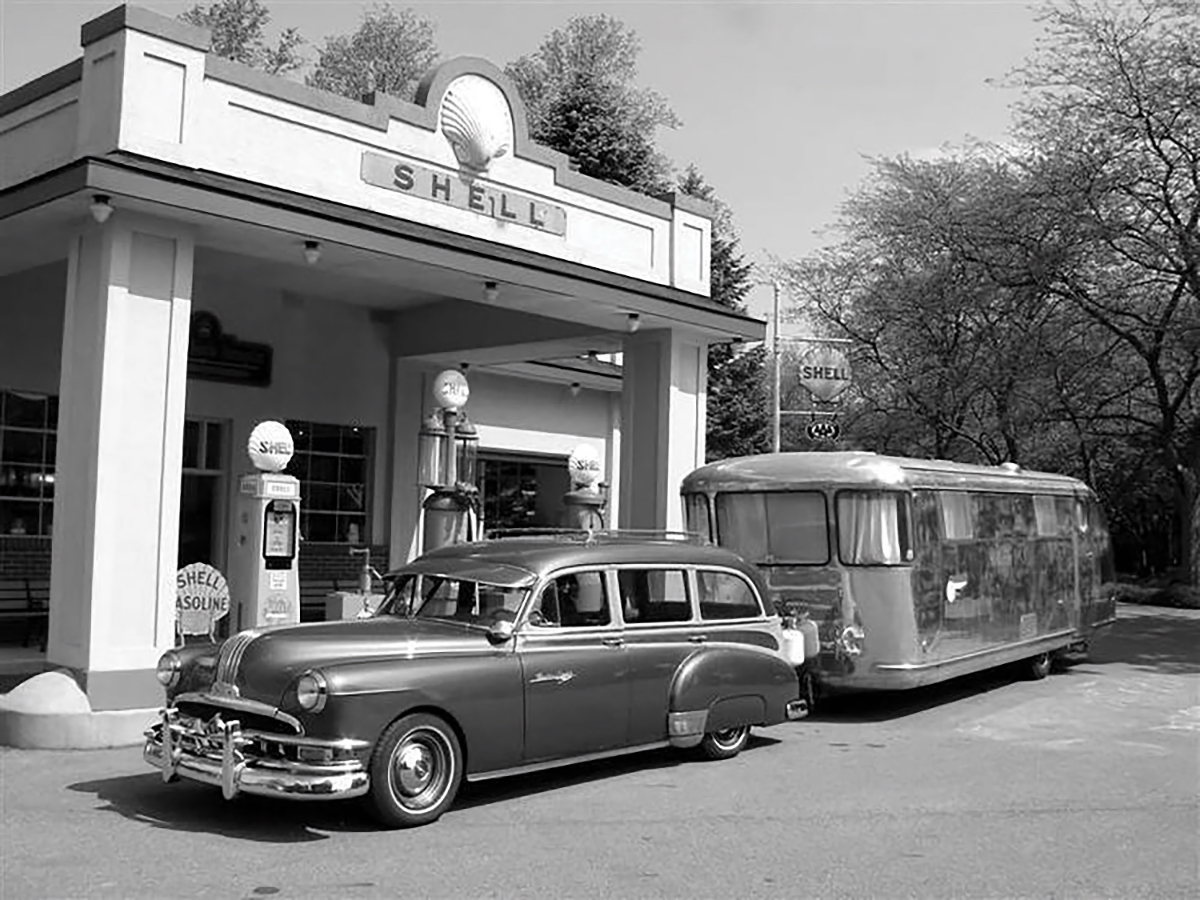
Photo Credit: Spartan Trailers
“They don’t make anything like this anymore,” says Vicki Ocken, who restores vintage campers from her home in Colorado. In response to a post-war housing shortage and veterans’ desire to explore the country, Spartans were built with long-range adventure in mind. But Ocken prefers to keep her 1954 two-bedroom double-ender docked in the backyard. She and her husband lived in it for a year with their two cats and 80-pound dog while they built a cabin, and they continue to use it as a guest house and office. It serves this purpose well, thanks to the high-quality design that’s eminently livable even by modern standards.
“Spartan wanted everything to be house-like and luxurious,” says Tim Heintz, a vintage trailer historian who owns three Spartans and runs a restoration shop in Florida. “They kept up with the times.”
Even without a slide-out, the wood-clad interiors are spacious, with thoughtful floor plans. Doors were designed to serve multiple functions. Open a closet, for example, and you close off a bedroom for privacy. Ocken’s 37-foot trailer has two chests of drawers, five closets, a full bath, and bunk beds in one of the rooms. Spartan ceased trailer production in 1962 after introducing 19 models to wanderlusting customers. The Crescendo, among the last produced, featured a kitchen skylight and jacuzzi tub—flourishes in keeping with the brand’s history.
“There’s something about a Spartan,” Heintz says. “Whether you see it from a half mile away on the highway…or see it in a park, you’re just awestruck.”
This article originally appeared in Wildsam magazine. For more Wildsam content, sign up for our newsletter.