America’s Public Lands are Under Threat Like Never Before
Budget cuts, staff reductions, and agency reorganizations put some of our favorite places in danger.
Image Caption: Image Courtesy of Jon Farmer/Getty
America’s public lands are without question some of our country’s best and most important assets. Together, the National Park Service and US Forest Service manage more than 278 million acres of land spread out across the entire country. Those lands aren’t just places that preserve the natural environment, but are also some of the most iconic travel destinations in the world. Perhaps even more importantly, they are the outdoor playgrounds that allow us to connect with nature, observe the planet in its natural state, and enjoy our favorite activities like hiking, biking, and camping.
But now, our public lands are under threat like never before. Looming budget and staff cuts, along with a dramatic reorganization, look to gut both the Park Service and Forest Service, leaving these important and beloved places in grave danger. At a time when climate change, commercial interests, and just plain neglect all pose existential threats, here’s what you need to know about America’s public lands.

Photo Credit: National Park Service
National Park Service Budget Cuts
The 2027 US fiscal budget proposed by the Trump administration on April 3 looks to make significant cuts to the National Park Service, further reducing the resources available for the NPS. The President’s budget proposal allocates $2.14 billion for the management, operation, maintenance, and general administration of the national parks.
That’s a reduction of roughly 25%—or $736 million—compared to last year, which also saw significant drops in funding and the NPS lose a quarter of its staff. All of this comes at a time when the national park’s maintenance backlog is already quite high. In 2023, the deferred maintenance for the national parks was already estimated to be $23.2 billion. In other words, the amount of repairs and upgrades already slated for the parks is more than ten times the total budget.
To its credit, the current administration has proposed extending the Legacy Restoration Fund, which was part of the Great American Outdoors Act passed in 2020. The fund expired last year, but by extending it, some of the budget shortfall to cover maintenance needs would be addressed. The LRF as originally passed allocates roughly $1.3 billion annually specifically for overdue maintenance and repair needs.
The 2027 budget also cuts the NPS construction budget to $50 million, a reduction of 72%. This has already caused delays and cancellations of some projects, such as plans to rebuild the lodge at Big Bend National Park. It could also delay the reconstruction of the Grand Canyon Lodge, which was destroyed in a wildfire last year.
Photo Credit: Kraig Becker
Further Staff Cuts for 2026
In 2025, as President Trump returned to office and launched the Department of Government Efficiency (DOGE), there were massive cuts to staff across the entire government. That included the loss of approximately 4,000 employees at the Park Service, with only a small number of those staffers getting replaced. This included not just administrative and support positions, but also park rangers, researchers, guides, visitor center staff, and more. Some part-time and seasonal hires helped make up for the shortfall, but the cuts resulted in longer wait times to enter the parks, fewer rangers to provide assistance, and reduced hours at onsite facilities.
Despite a drastic reduction to its workforce last year, it appears that the NPS is in for another round of staff cuts in 2026. The Department of the Interior, which oversees the Park Service, will offer another opportunity for employees to accept a “deferred resignation program” or take voluntary early retirement. Both options offer monetary incentives for staff to step down from their roles and exit the NPS. But with the organization already stretched thin on the staffing front, it will likely lead to a reduced visitor experience in the national parks.
Just how bad was it in some of the busiest national parks last year? For starters, many campgrounds delayed opening due to funding and resource uncertainty. Some parks cancelled long-running educational and engagement programs due to lack of staff, while others had facilities that remained closed following storm or fire damage there was no budget for repairs. The lack of staff was so bad at times, that there wasn’t even someone to collect entrance fees at Yosemite. The list goes on and on, and is likely to get worse heading into the busy 2026 travel season.
Photo Credit: Claudia Cooper/Getty
Dismantling the US Forest Service
Like the National Park Service, the US Forest Service is also facing some serious challenges for 2026. Last week, the Trump administration announced sweeping plans to change the way the USFS operates in what is essentially a series of moves that cuts the budget, reorganizes the agency, and undercuts everything it has stood for.
The plan is to move the Forest Service’s headquarters out of Washington, DC to Salt Lake City, UT. The administration couches this move as putting the USFS closer to the lands that it manages, but in reality it makes it more challenging for administrators to work with lawmakers on policies that help protect those lands. It also cuts HQ staff by a third and drops it into a state that has worked to undermine public lands in recent years. High-profile clashes over commercial access to places like Grand Staircase-Escalante and Bears Ears National Monuments have underscored the state’s lack of concern for protecting the natural environment.
Additionally, the Department of Agriculture, which oversees the Forest Service, will also close all ten USFS regional offices, and in most cases, dismiss the staff that ran those locations. The cuts also include shuttering 50 research stations across 31 states, greatly reducing the capacity for monitoring the impact of climate change and other threats to the environment. Researchers’ studies included things like the dangers of wildfires and how to cultivate biomes in their aftermath, as well as the impact of logging, the protection of endangered plants and animals, and more.
The Trump administration’s plan does include adding 15 state directors that will be appointed by the Department of Agriculture and will serve alongside governors and state legislators. These appointees will act as liaisons between those states and the Forest Service in an effort to more broadly align their goals. Detractors of this plan worry about handing states more control, however, as local interests often skew towards exploiting the lands for commercial gain rather than protecting the environment and for public use.
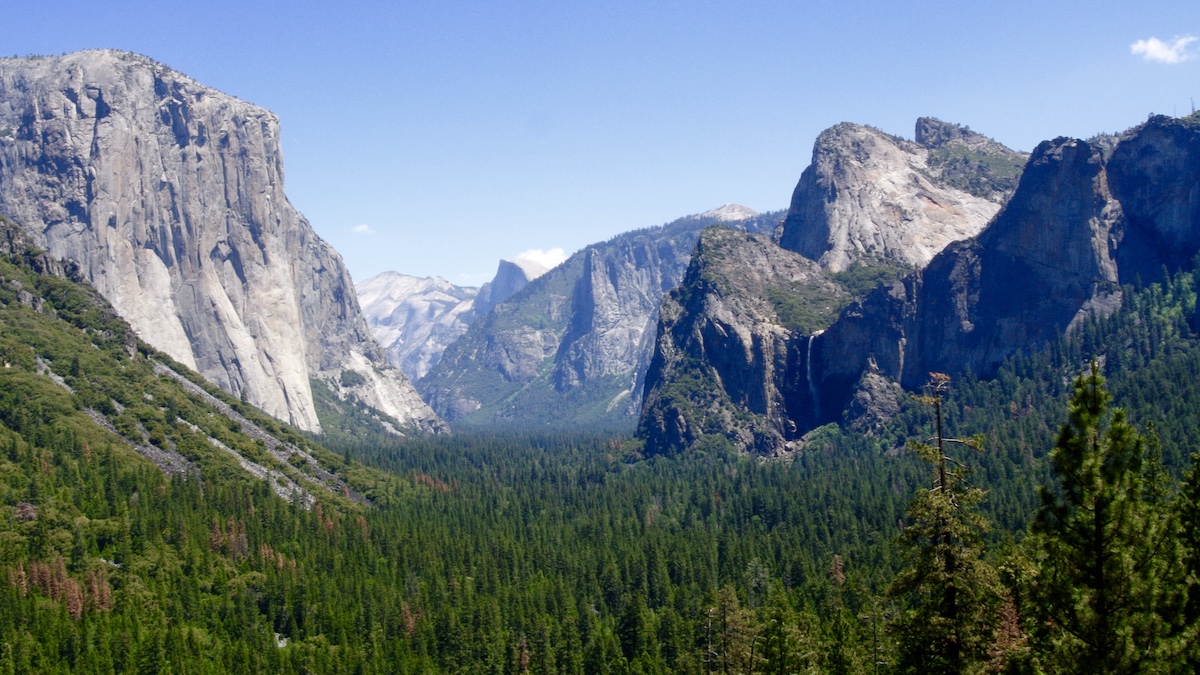
Photo Credit: Kraig Becker
A Boost in Defense Spending
The proposed 2027 budget includes plenty of other cuts, too, most notably to education, scientific research, and health care. For example, NASA could see a $5.6 billion (23%) drop in funding, even as the US gears up for another space race to the moon. The space agency’s science division would see another $34 billion (47%) cut, effectively cancelling as many as 40 projects. Overall, the Trump admin is looking for a 10% budget cut across the board, resulting in a $73 billion reduction compared to FY2026.
That said, not every aspect of the proposed budget is getting cut. The President is asking for $1.5 trillion in military spending, which if approved would be the largest amount ever spent on defense. That’s up $500 billion over the previous fiscal year. He’s also proposed a $10 billion fund “Presidential Capital Stewardship Program” earmarked for construction and beautification projects around Washington DC. As GearJunkie points out, that’s more than three times the full budget of the National Park Service.
Obviously, any president’s budget proposal is a reflection of their priorities and how they want to allocate money and resources. In this case, it is clear that the current focus is on national defense and military spending, with huge sums of money looking to be funneled in that direction. But those increases in spending come at the expense of numerous programs that can directly help or enhance the lives of Americans. That includes spending on the country’s public lands, which are widely supported by the general public. In fact, a poll conducted last fall showed just 16% of Americans support continued staffing cuts at the National Park Service, with 12% approving of the budget cuts to the NPS.
Thankfully, the proposed budget hasn’t been ratified by Congress yet, and there is still a chance that these funding cuts could be struck down. President Trump didn’t get all of the cuts and reallocations that he asked for last year, and there is a chance there will be pushback this year, too. If you care about America’s public lands and want to see them fully funded and cared for, there is still time to reach out to your representatives in Washington to express your concerns. After all, the national parks and forests don’t care which side of the political spectrum you fall on. They are there for all to enjoy.
Click here to learn find the contact info for members of the House Of Representatives and here for US Senators.

Kraig Becker is a writer in the RV, outdoors, and adventure travel space. Over the course of his career he has contributed to such outlets as Popular Mechanics, Outside Online, Business Insider, TripSavvy, Digital Trends, GearJunkie, The Adventure Blog, and countless others. An avid runner and cyclist, he enjoys camping, hiking, mountain biking, kayaking, and just about any other outdoor activity. His travels have taken him to seven continents and on many amazing adventures.