Road Icon: The Ford Condor
Boxy and bizarre, the Ford Condor is a rare bird that became a motorhome legend.
Image Caption: Photo Credit: Ford Motor Company Archives
You can’t always choose how you’ll be remembered. When it first went on sale in 1962, the Ford Condor motorhome was billed as pure luxury. Sitting atop a delivery-grade modified Ford chassis, the 27-foot vehicle boasted enough beds to sleep six, a fully outfitted kitchen with a four-burner gas stove and oven, and an asbestos-tiled floor. (This was the ’60s, remember.) The extremely rectangular Condor essentially resembled a school bus wrapped in aero-crimped aluminum, finished with baked enamel in wholesome shades like pastel turquoise. This exterior didn’t shout about the lavish interior so much as raise a sassy eyebrow.
What earned this rig a spot in the annals of pop culture, on the other hand, was its big, honking presence in circumstances ranging from rugged to unpleasant. Most famous is the 1973 Ford Condor II, rusted beyond recognition, that played the role of Cousin Eddie’s RV in the 1989 movie National Lampoon’s Christmas Vacation. Or a 1972 model’s trackside appearances as the neon-orange hospitality vehicle for McLaren employees during Formula 1 races and other events. Or another Condor’s rollicking ride through the 1969 off-road Baja 1000 race, just to prove that it could. (With parts of the body lopped off and the engine modified to run on butane and gasoline at up to 90 mph, the dinged-up “Debbie Special” finished 70 hours after the race winner, but went on to compete in several other long-distance rallies.)
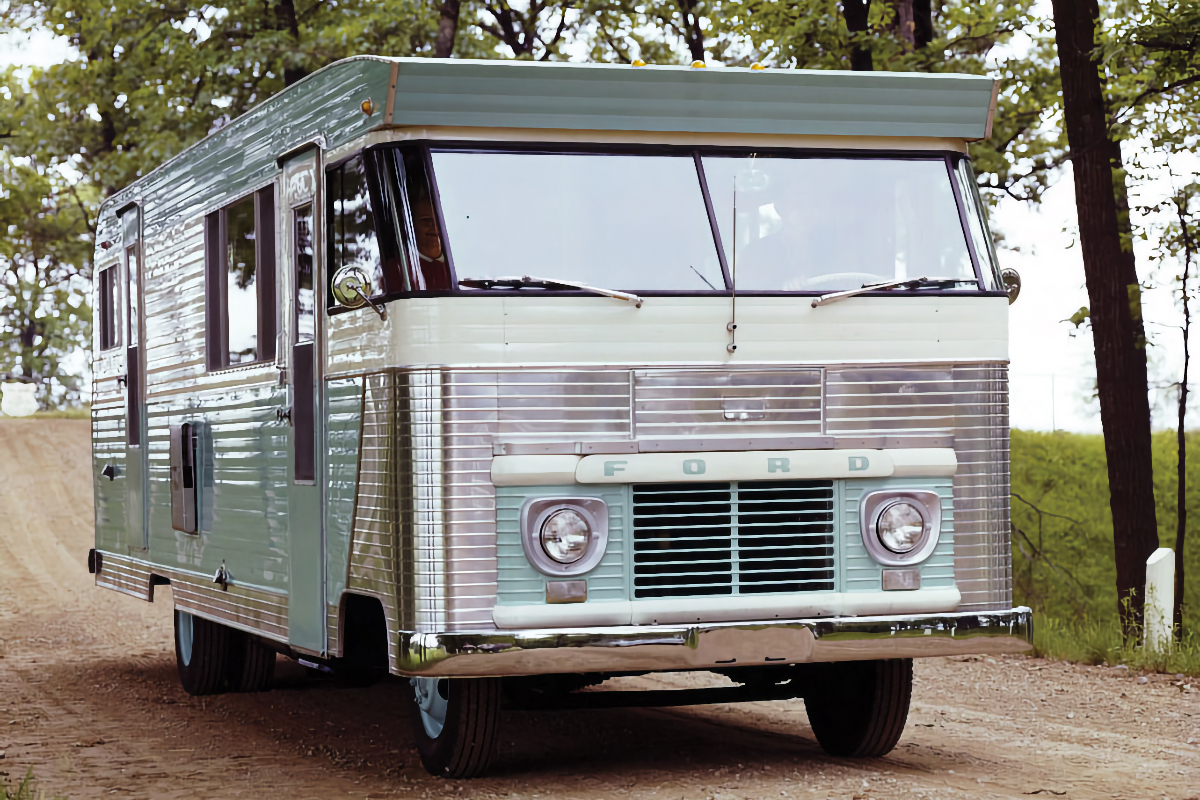
Photo Credit: Ford Motor Company Archives
Today, Condor fans often point out its coolness factor and historical adventures. They tend to say less about whether it was a driveable vehicle or a model of sanitation standards. The 11,000-to-13,000-pound Condor tended toward sluggishness and lately shines in more stationary pursuits, like once again sitting pretty on the sidelines of McLaren races, where the temporarily misplaced original returned after McLaren CEO Zak Brown repurchased it in 2020.
Then there’s the delicate matter of the once-Jetsons-worthy (but now horrifying) Thermasan waste destruction system. Once the Condor reached 30 mph, the Thermasan could be activated to heat up and incinerate the contents of the toilet and wastewater holding tanks. It then spewed the infernal mixture out of the exhaust pipe in what Thermasan, not without defensiveness, claimed was “a bacteria-free, invisible, harmless emission that complies with Federal Register, Volume 33, No. 108, Par. 2 and National Sanitation Foundation Standard No. 24.”
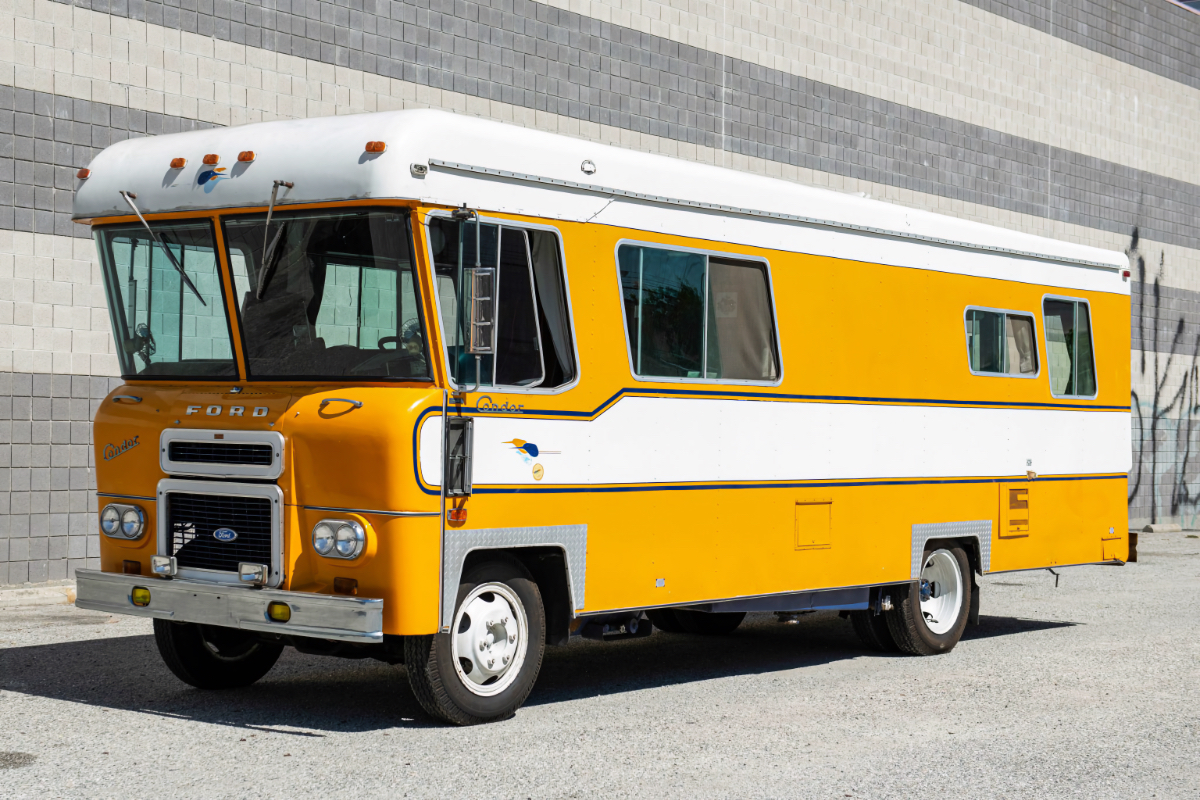
Photo Credit: McLaren Racing
Appealing as this sounds, the premise never caught on in other RVs. Seemingly, interest in the Condor faded too, just around the time that some of its most famous specimens were leaving the factory. “Just as the giant California condor, North America’s largest bird, hovers and glides freely in the sky, Condor Coach carries you with new travel freedom,” reads a brochure from 1968. Less than a decade later, the Condor Coach Company disappeared completely. (And, well, the real California condor nearly went extinct in the wild a decade after that.)
But there’s no denying the condor-like size and influence of the company’s most famous rig: The Ford Condor motorhome, unlike its maker and many of its original selling points, is forever.
This article originally appeared in Wildsam magazine. For more Wildsam content, sign up for our newsletter.